
What to know
- Google has integrated Gemini AI into Google Maps, introducing a conversational feature called “Ask Maps.”
- You can ask natural questions about places, routes, or trips instead of typing search keywords.
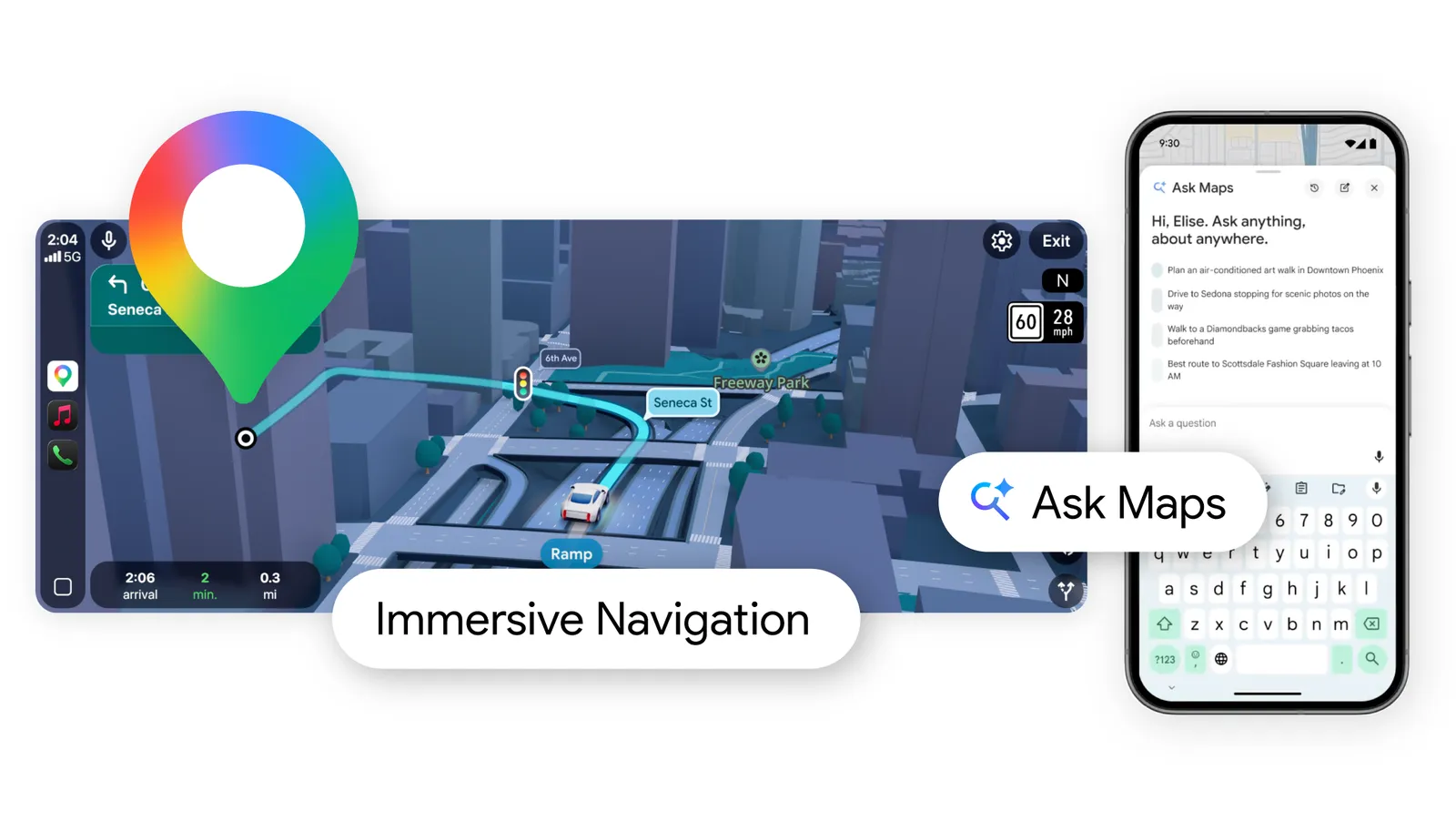
- A new Immersive Navigation mode adds detailed 3D visuals and smarter route explanations.
- The update is rolling out on Android and iOS in the U.S. and India, with broader expansion planned.
Google has introduced one of the most significant updates to Google Maps in more than a decade by integrating its Gemini AI model directly into the navigation platform. The change transforms Maps from a traditional route-finding tool into an AI-powered assistant that can answer questions, plan trips, and provide contextual travel suggestions.
The most visible addition is a feature called “Ask Maps.” Instead of entering simple search queries such as “restaurants near me,” you can ask conversational questions like “Find a quiet café nearby with charging points” or “Where should I stop during a road trip to Jaipur?” Gemini interprets the request, analyzes location data, reviews, photos, and other information from Google Maps, and then delivers tailored recommendations.
The system works because Gemini is connected to the vast Maps database that includes information about more than hundreds of millions of places worldwide. The AI uses this data along with your previous activity in Maps to provide contextual suggestions that match your preferences.
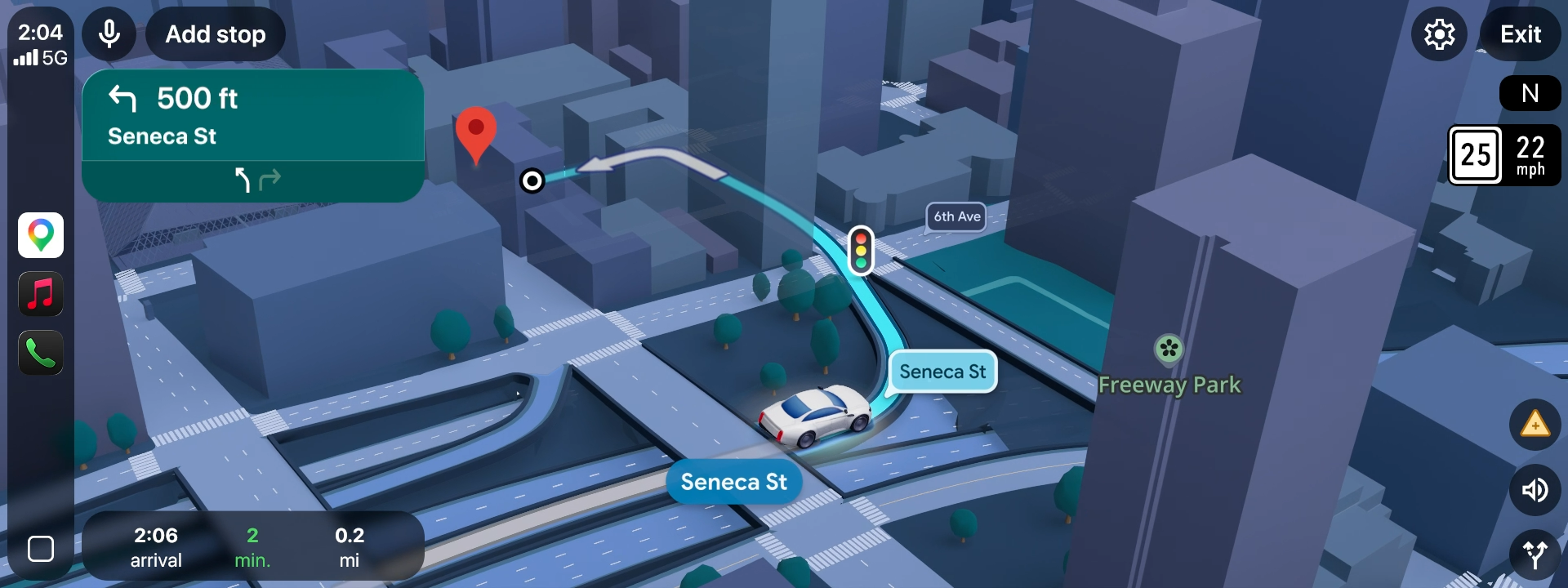
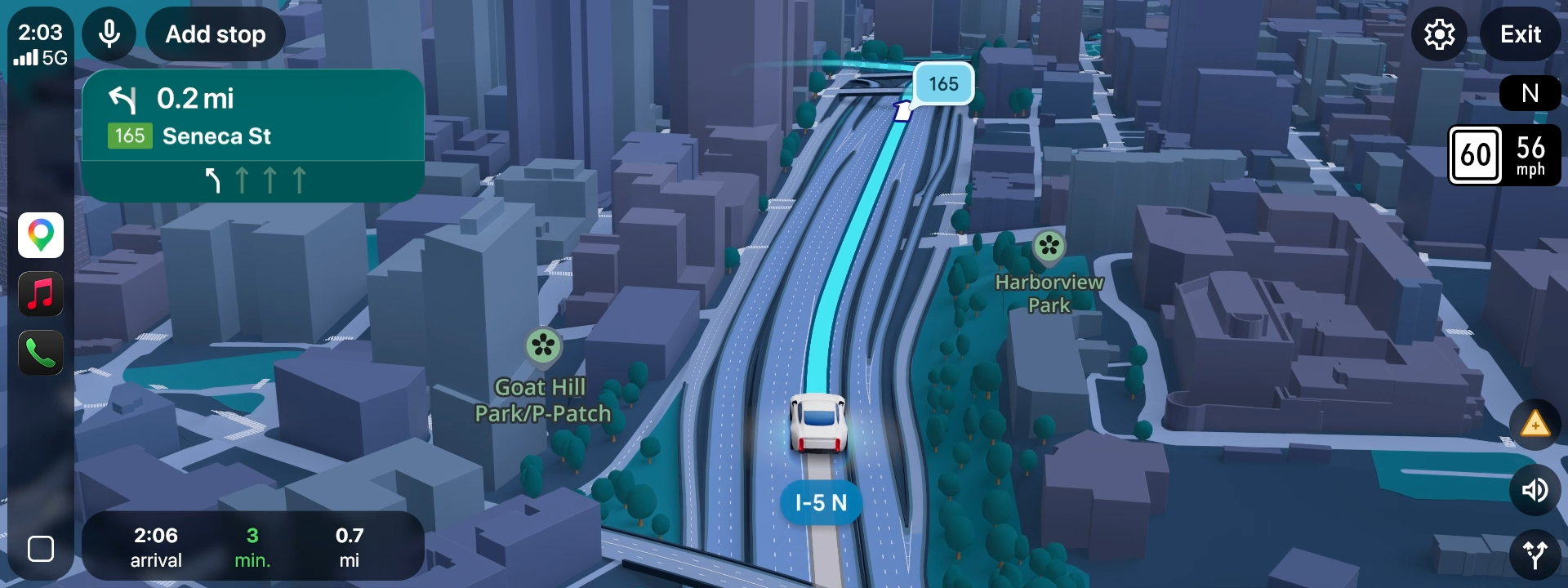
Another major addition is Immersive Navigation, a redesigned driving interface that uses advanced 3D visuals. Buildings, roads, terrain, and landmarks appear in detailed renderings, helping you better understand complex intersections, lane changes, and turns. The interface can highlight road features such as crosswalks, traffic lights, and merge points, which makes route planning clearer before and during a trip.
Gemini also enables hands-free interaction with Maps. While driving, walking, or cycling, you can ask questions without touching the screen. For example, you can request nearby restaurants, ask about traffic conditions, report road hazards, or find stops along your route. This conversational interface aims to keep users focused on the road while still accessing useful information.
Google says the AI recommendations rely primarily on Maps data and search activity rather than pulling information from other apps like Gmail. The company also states that paid placements currently do not influence the results shown through the new conversational search feature.
The update is rolling out to Android and iOS users in the United States and India, with desktop support and broader international availability expected later. Google describes the Gemini-powered experience as part of a broader effort to embed AI across its ecosystem, including products like Chrome and Workspace tools.
As Gemini becomes more deeply integrated into Google’s services, Google Maps may evolve from a navigation app into a full travel planning assistant that helps you decide not only how to get somewhere, but also where to go and why.