- What to know
- Quick overview of Pokémon markets in Pokopia
- How Pokémon markets work in Pokopia
- Understanding the barter-based trading system
- Profitable items that generate strong trade value
- How to build Pokémon markets in Pokopia
- Designing efficient market layouts for trading
- Why open-world trading tables are often more efficient
- How trading unlocks rare items and furniture
What to know
- Pokémon markets are created using habitats that contain tables, a cash register, and power sources.
- Trading works through a bartering system based on item value rather than quantity.
- Assigning a Pokémon with the Trade skill is required for the market to function.
- Valuable crafted items and rare artifacts can generate large trade profits and unlock rare goods.
After you progress far enough in Pokémon Pokopia to begin building more advanced habitats, trading becomes one of the most useful systems in the game. Markets allow you to exchange crafted goods, decorations, and rare artifacts for new items you may not yet have access to. Instead of relying solely on exploration, you can obtain rare furniture, decorations, and resources simply through strategic trading.
The entire system revolves around creating market habitats, assigning Pokémon to run the shop, and providing items with strong trade value. When set up correctly, a market becomes a reliable way to convert cheap materials into high-value trades.
Quick overview of Pokémon markets in Pokopia
| Feature | Details |
|---|---|
| Market Requirement | Habitat with tables and a cash register |
| Power Requirement | Market must be powered to function |
| Trading System | Barter system based on item value |
| Worker Requirement | Pokémon with Trade skill assigned |
| Best Profit Items | Vine wall decorations, statues, mysterious pedestals |
| Rare Item Source | Trading can unlock many rare furniture items |
| Layout Considerations | Wide paths, roads, and stairs improve navigation |
| Efficiency Tip | Open-world tables are easier to manage than enclosed Pokémon buildings |
How Pokémon markets work in Pokopia
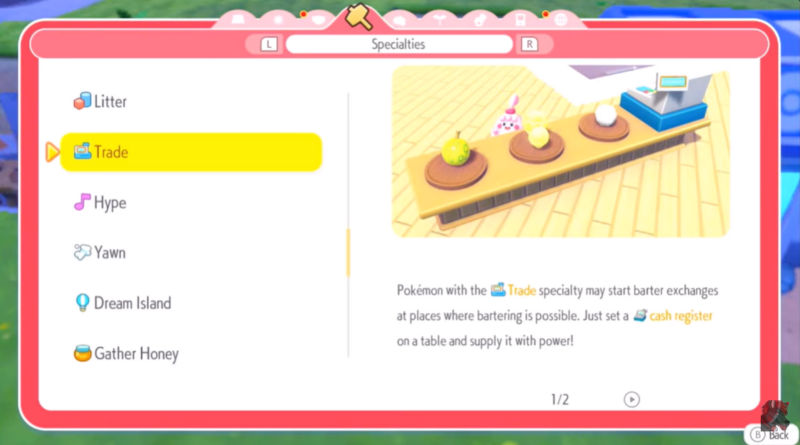
Trading in Pokopia revolves around building a habitat that functions as a shop. The core components of any Pokémon market are tables and a cash register. These tables act as display stands where items are placed for trade.
Once the market structure is built, it must be connected to a power source. Without power, the market habitat will not operate and no trading activity will occur.
Another critical element is staffing the market with a Pokémon capable of trading. Only Pokémon with the Trade skill can properly run a shop habitat, meaning you must assign the correct Pokémon to the structure before any trades can happen.
When a market is running, Pokémon visitors will begin interacting with the shop and exchanging items. The items you place on display determine the value of potential trades.
Understanding the barter-based trading system
Pokopia does not rely on traditional currency for its trading system. Instead, the entire market runs on a barter mechanic where items are evaluated based on their point value.
Each item placed in your market has a hidden or defined value. When another Pokémon offers a trade, the total value of the items they provide must roughly match the value of the items you are offering.
Because of this, high-value items dramatically increase the quality of trades you receive. The better your display items are, the more valuable the items offered in return will be.
This system allows players to strategically craft inexpensive items that still carry a high trade value.

Profitable items that generate strong trade value
One of the easiest ways to generate profit in Pokopia markets is by crafting items that are cheap to produce but carry a surprisingly high trade value.
A commonly used strategy involves crafting vine wall decorations. These decorations are extremely cheap to make yet are valued at around 200 points in trades, making them one of the most reliable trading resources in the game.
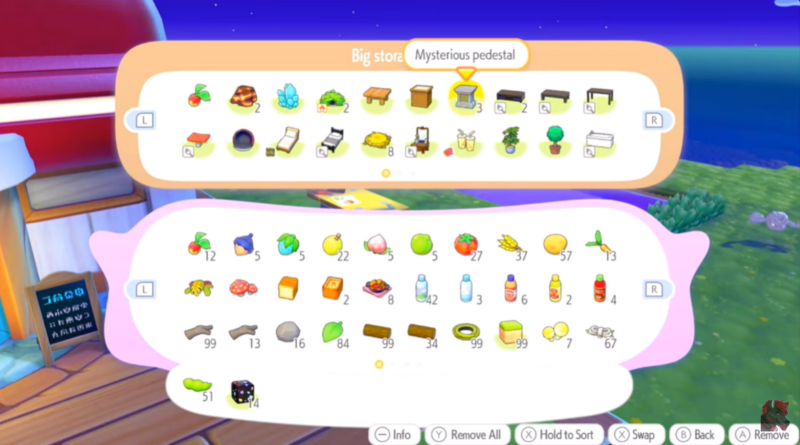
Another major source of value comes from statues and mysterious pedestals. These rare decorative objects can be found in locations like the Arcanine Dream Island.
Statues and mysterious pedestals often carry trade values between 1,000 and 1,500 points, making them some of the most powerful items for high-end trading.
By combining high-value artifacts with crafted decorations, you can maintain a steady flow of profitable trades.
How to build Pokémon markets in Pokopia
Building an efficient Pokémon market requires careful planning of both structure and layout. The goal is to create a comfortable environment where Pokémon can easily move, trade, and interact with the habitat.
Begin by constructing a habitat large enough to support trading activities. Place multiple tables that will act as item display stands. These tables serve as the primary trading interface where items are placed for bartering.
Install a cash register within the habitat. The register acts as the central point for trade operations. Without the register, the habitat will not function as a proper market.

Connect the market to a power source. Markets require power to operate, so make sure your power infrastructure reaches the habitat.
Assign a Pokémon with the Trade skill to the habitat. The assigned Pokémon will manage the market and handle item exchanges with visiting Pokémon.
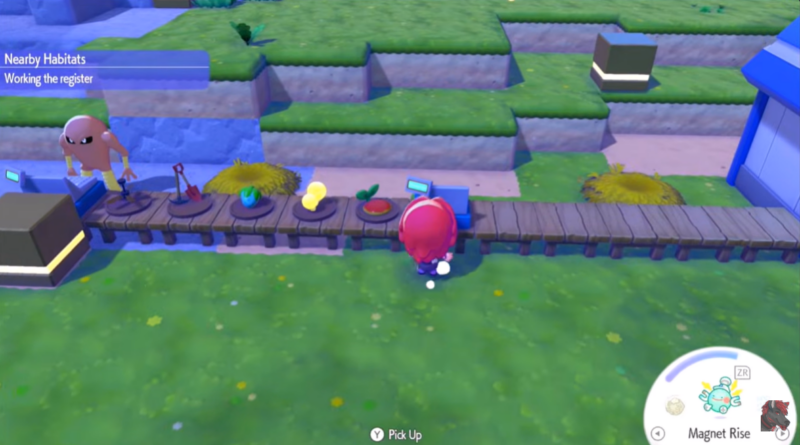
Place valuable items on the tables to attract better trades. Craft decorations or place rare artifacts to increase the value of your market inventory.
Designing efficient market layouts for trading
The physical layout of your market significantly affects how well it operates. Pokémon need to be able to comfortably move around the area to interact with trading tables.
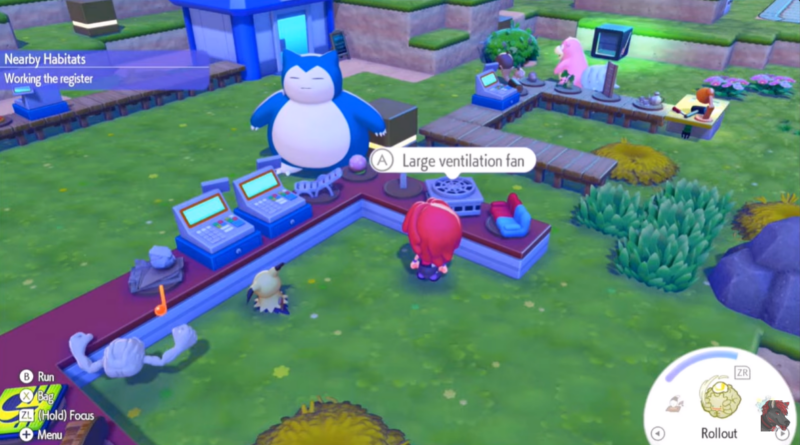
Adding roads and stairs around your markets improves navigation. Better navigation increases Pokémon comfort levels and raises the overall habitat environment rating.
Larger markets are also useful for accommodating bigger Pokémon such as Snorlax. These larger creatures require more space to navigate around furniture and displays.
Another effective design approach involves creating rows of trading stands. This setup allows multiple trades to occur simultaneously while keeping the market visually organized.
Why open-world trading tables are often more efficient
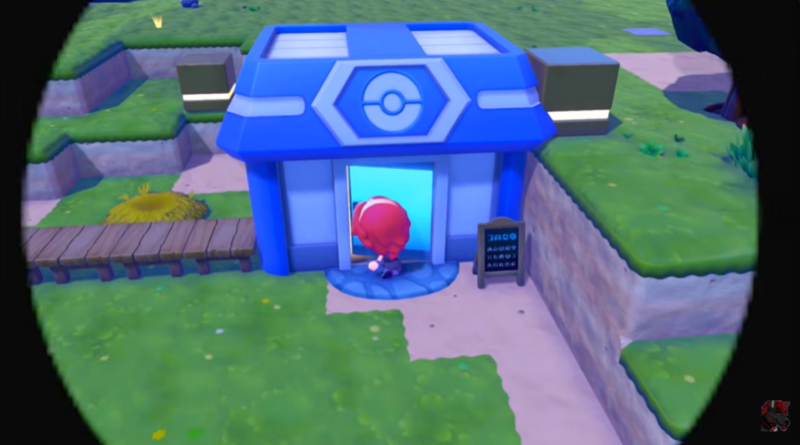
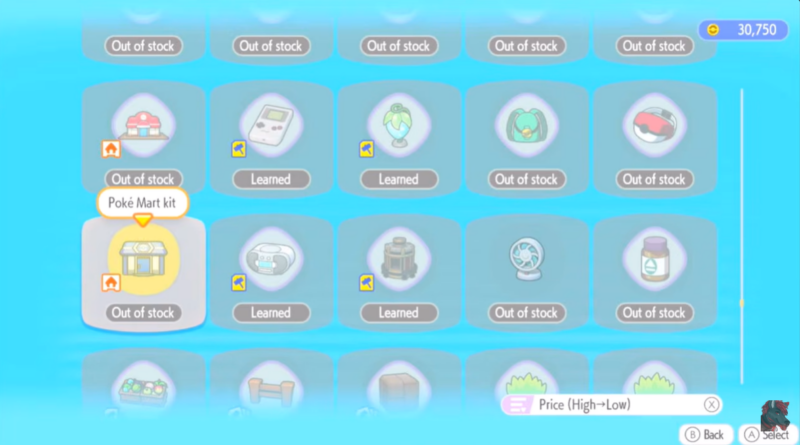
Pokopia allows players to build specialized Pokémon shop buildings, but these structures are not always the most efficient trading option.
One major downside is that you cannot view a building’s inventory without entering it, which slows down trade management.
Open-world tables, on the other hand, allow you to see all items at a glance. This makes it easier to manage inventory and quickly swap out trade items.
Because of this visibility advantage, many players prefer open table markets for large-scale trading operations.
How trading unlocks rare items and furniture
One of the most exciting aspects of Pokopia’s trading system is the ability to obtain items that cannot easily be crafted or found.
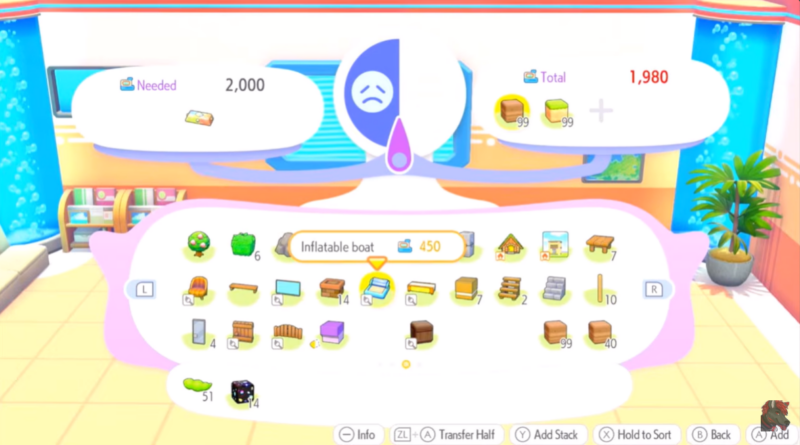
Through repeated trading, you can acquire a wide variety of rare furniture pieces, decorations, and novelty items.
Even unusual items such as gaming fridges and other high-end decorative furniture can eventually appear through trading offers.
This means your market acts not only as a profit generator but also as a gateway to expanding your collection of unique items.