- What to know
- How the vault inventory system works in Marathon
- How to sell items in Marathon
- Marathon Vault Inventory vs. Armory Inventory
- Why selling items matters during the Lockdown event
- When you should sell items to free inventory space
- Expanding vault space over time
- Managing your Marathon inventory during Lockdown
What to know
- Selling items in Marathon is done through the Vault inside the Loadout menu.
- Holding the sell key on an item converts it into credits instantly.
- Vault storage is limited, so selling gear becomes important during heavy farming events like Lockdown.
- Selling excess equipment frees space for rare loot and keeps your credit economy healthy.
Inventory management plays a major role in Marathon’s extraction-based gameplay. Every successful run rewards you with weapons, gear, and materials that automatically move into your permanent stash. While collecting equipment is satisfying, storage space is limited, and without regular management your vault can quickly fill up.
This becomes especially noticeable during the Lockdown event, where players often return from runs with large amounts of loot. Understanding how the selling system works allows you to keep only the gear you truly need while converting the rest into useful credits.
| Feature | Details |
|---|---|
| Main storage system | Vault |
| Starting vault capacity | Around 160 item slots |
| Currency gained from selling | Credits |
| Sell method | Hold the sell key while selecting an item |
| Best time to sell | When vault storage fills during farming or events |
| Event impact | Lockdown runs produce large amounts of loot |
The Vault acts as the long-term storage for all items extracted from missions, making it one of the most important systems for managing your equipment between deployments.
How the vault inventory system works in Marathon
Whenever you successfully extract from a mission in Marathon, all items in your backpack are transferred into the Vault, which serves as your permanent stash. This includes weapons, attachments, healing supplies, crafting materials, and other equipment collected during your run.
At the start of the game, players typically have around 160 storage slots available in the Vault. While this sounds like a lot of room initially, repeated successful extractions quickly fill the stash with gear.

Extraction shooters intentionally create inventory pressure to encourage players to use, trade, or sell their equipment instead of storing everything indefinitely. This system keeps the in-game economy active and forces players to make meaningful decisions about what gear is truly valuable.
During events like Lockdown, this pressure becomes even more noticeable. Players often complete multiple successful runs in a short time, bringing back weapons, salvage materials, and equipment that can quickly consume available space.
How to sell items in Marathon
Selling items in Marathon is handled directly through the Vault interface inside your loadout menu. The process is simple but easy to miss if you are unfamiliar with the interface.
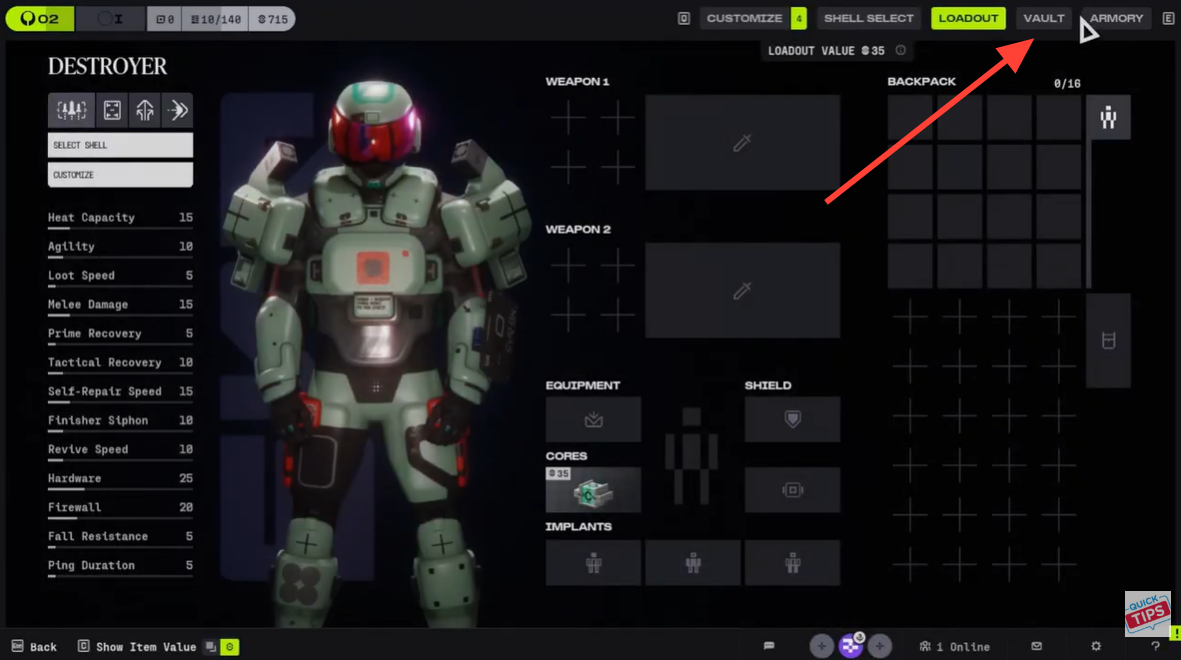
Step 1
Open the main menu and navigate to Loadout, then select the Vault tab to view your stored equipment.
Step 2
Browse through the vault inventory and hover over the item you want to sell.
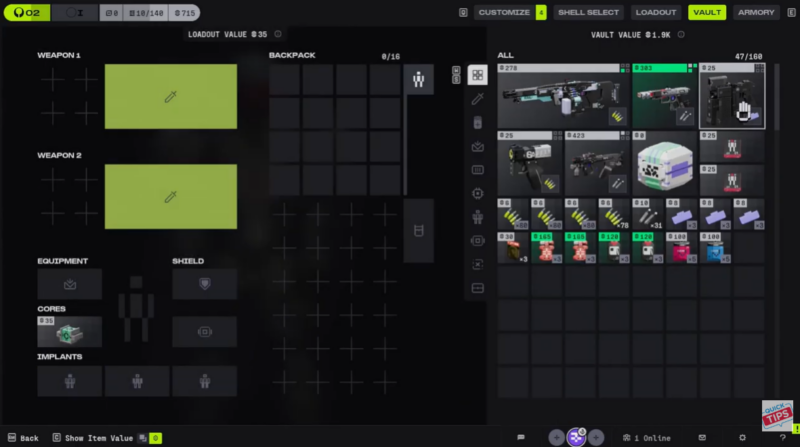
Step 3
With the item highlighted, hold the sell key (F by default).
Step 4
Once the action completes, the item is removed from your vault and the corresponding credits are added to your wallet.
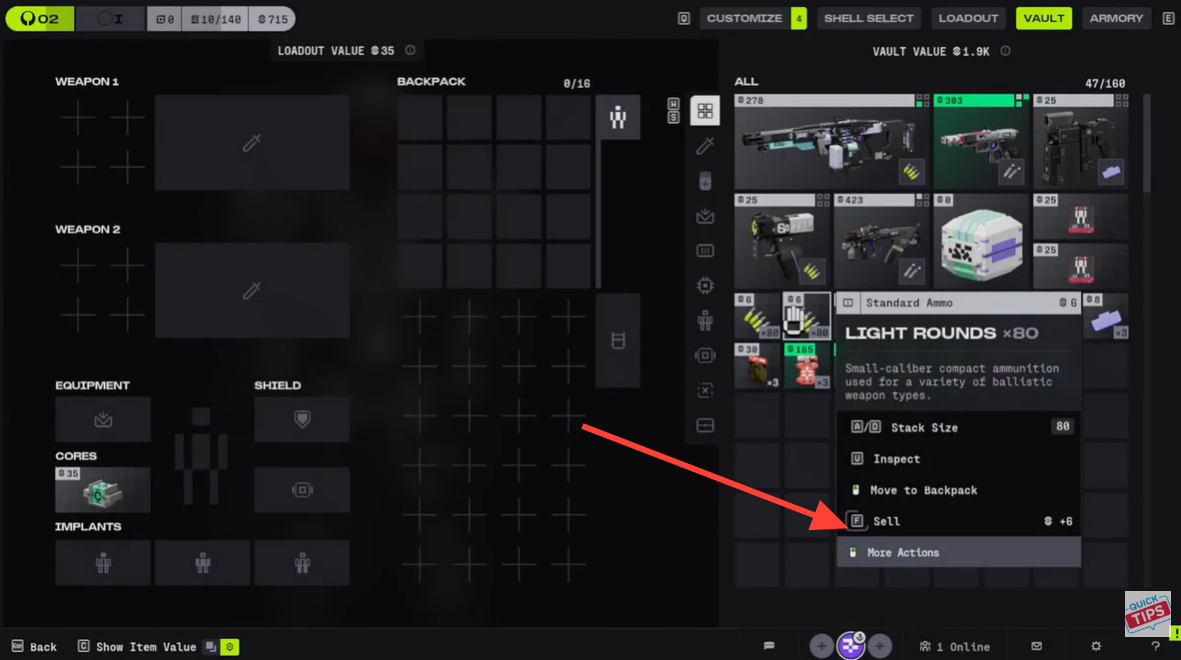
This allows players to quickly convert unwanted gear into currency without leaving the loadout screen.
Marathon Vault Inventory vs. Armory Inventory
Understanding the difference between the Vault and the Armory inventory is important for managing your items effectively.
The Vault is your permanent storage space, where every item extracted from missions is stored. This includes weapons you plan to use later, rare materials, and backup equipment for future runs. Because this storage has a slot limit, it requires regular management.
The Armory, on the other hand, functions more like a shop and equipment preparation interface. In this area you can purchase weapons, ammo, consumables, and other supplies using credits. Items bought from the Armory can be equipped immediately for your next deployment or stored in the Vault if space is available.

The key difference is that the Vault stores what you already own, while the Armory is where you acquire new gear. Selling items affects only your Vault inventory, converting stored items into credits that can then be spent in the Armory.
Players often sell surplus equipment from the Vault in order to fund new purchases in the Armory, creating a cycle of looting, selling, and upgrading.
Why selling items matters during the Lockdown event
The Lockdown event significantly increases the amount of loot players extract during missions. Because the event encourages frequent deployments and aggressive looting, vault space fills much faster than usual.
Without selling items regularly, you may encounter several problems.
Your vault can reach its capacity limit, preventing you from storing newly extracted gear. When this happens, you are forced to either delete items immediately or reorganize your stash before entering another run.

Another issue is gear duplication. During events, players often collect multiple copies of the same weapon or attachment. Keeping too many duplicates wastes valuable storage slots that could instead hold rare equipment or crafting materials.
Selling unwanted items solves both problems at once. It clears vault space while also generating credits, which are needed for purchasing ammunition, consumables, and equipment upgrades.
When you should sell items to free inventory space
The most effective strategy is to sell items regularly rather than waiting until your vault is completely full. Doing this after each play session helps maintain a healthy balance of storage space and available credits.
Players often sell duplicate weapons, low-tier attachments, and gear that does not match their preferred playstyle. If an item has remained unused in your vault for several sessions, converting it into credits is usually the more practical choice.

At the same time, it is generally worth keeping rare crafting materials, faction upgrade components, and high-tier weapons that may be difficult to obtain again.
The goal of selling items is not to eliminate your inventory entirely, but to maintain a focused stash that contains only gear you realistically plan to use.
Expanding vault space over time
Although selling items is the fastest way to free storage space, Marathon also provides ways to increase your vault capacity over time.
Certain faction progression systems allow players to unlock vault upgrades that add additional storage rows. These upgrades usually require credits and specific materials obtained during missions.
Even with expanded storage, however, vault management remains important. No amount of storage will be enough if you keep every item indefinitely, which is why selling remains a core mechanic throughout the game.
Managing your Marathon inventory during Lockdown
Events like Lockdown reward players who extract with as much loot as possible, but success also means handling the resulting inventory overflow. Reviewing your vault regularly and selling excess gear ensures you always have room for the next successful run.
Treating your vault as an active equipment pool rather than a permanent storage archive keeps your inventory efficient and your credits flowing. When used correctly, the selling system allows you to maintain space for valuable loot while constantly funding new loadouts for future deployments.