
- What to know
- How prestige titles and tracks actually work
- How to prioritize your first prestige allocations
- How to maximize close combat damage from prestige
- Understanding soft caps and repeated entries
- How playstyle should change your prestige plan
- How to use respecs and refine your allocations
- How to build a practical allocation template
- How to approach utility and drop-focused perks
- Example reward-focused prestige spread
What to know
- Prestige points are split into two tracks, and you need to invest in both to fully optimize your character.
- Close combat damage bonuses have soft caps, so you must rotate allocations to avoid wasting points.
- Early on, prioritize flat survivability and core damage increases over niche bonuses or drop rate boosts.
- You can reset and reallocate prestige at any time, so do not be afraid to rebuild as your gear and playstyle evolve.
Prestige in Nioh 3 is less about blindly stacking numbers and more about understanding how caps, diminishing returns, and dual-track titles work together to boost your build.
| Aspect | Key idea |
|---|---|
| Prestige structure | Two tracks of titles that you upgrade in parallel |
| Main damage goal | Maximize close combat damage vs humans and yokai without hitting caps |
| Early priorities | Life, ki, toughness, and base damage before utility |
| Mid/late priorities | Crit damage, elemental damage, ki recovery, and stance-specific perks |
| Respec usage | Reset often as your build, gear, and preferred weapon type evolve |
| Playstyle influence | Different allocations for samurai, ninjutsu, and onmyo-heavy builds |
| Long-term goal | Fill out core offensive and defensive lines, leaving niche perks last |
How prestige titles and tracks actually work
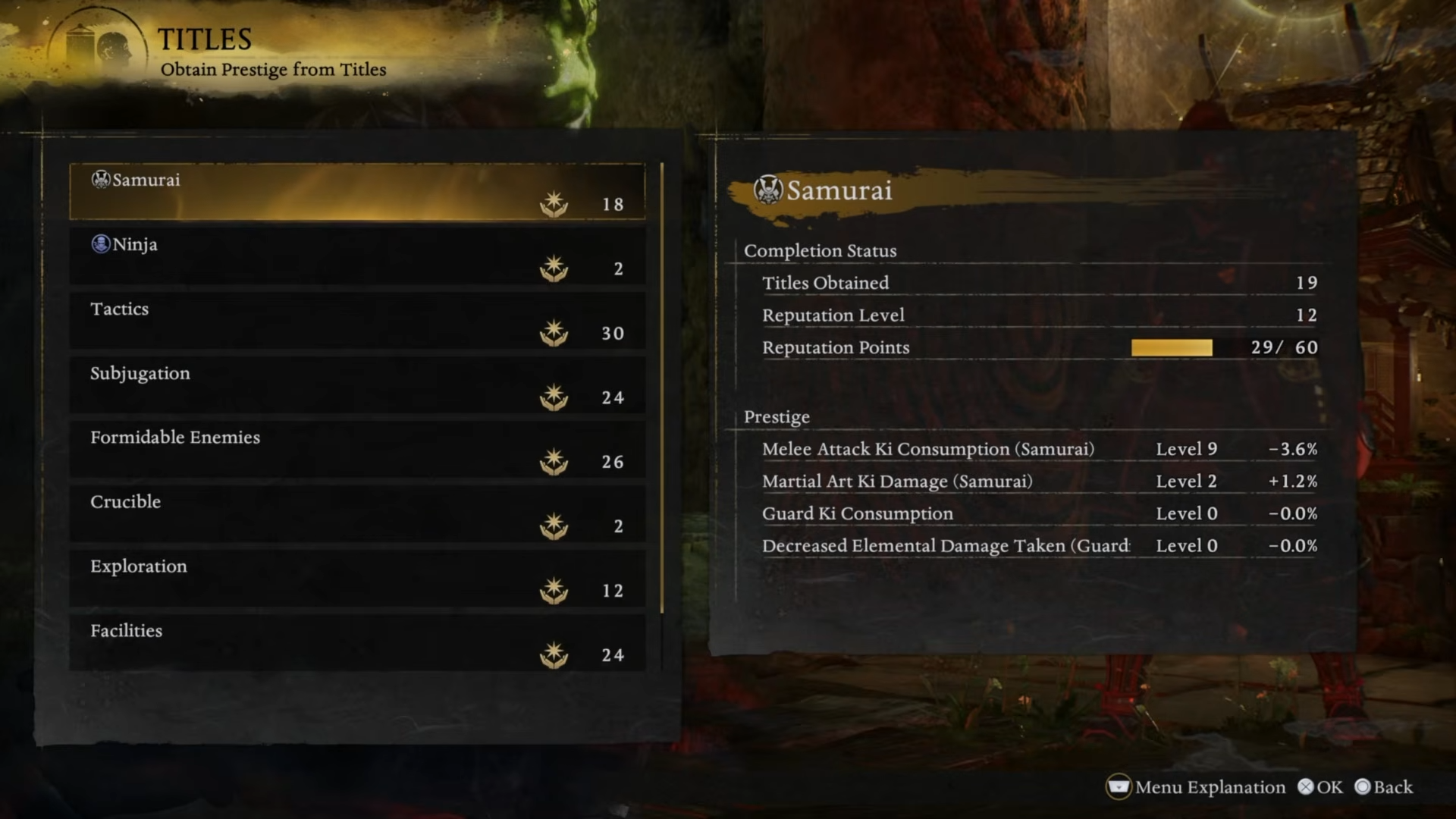
Prestige points feed into titles on two parallel tracks, each representing a different flavor of passives that you can level up.
As you accumulate more titles, you unlock more allocation opportunities, but each individual stat eventually approaches a practical maximum.
The important detail is that prestige menus will keep offering the same stat across multiple rows once you push towards its upper limits.
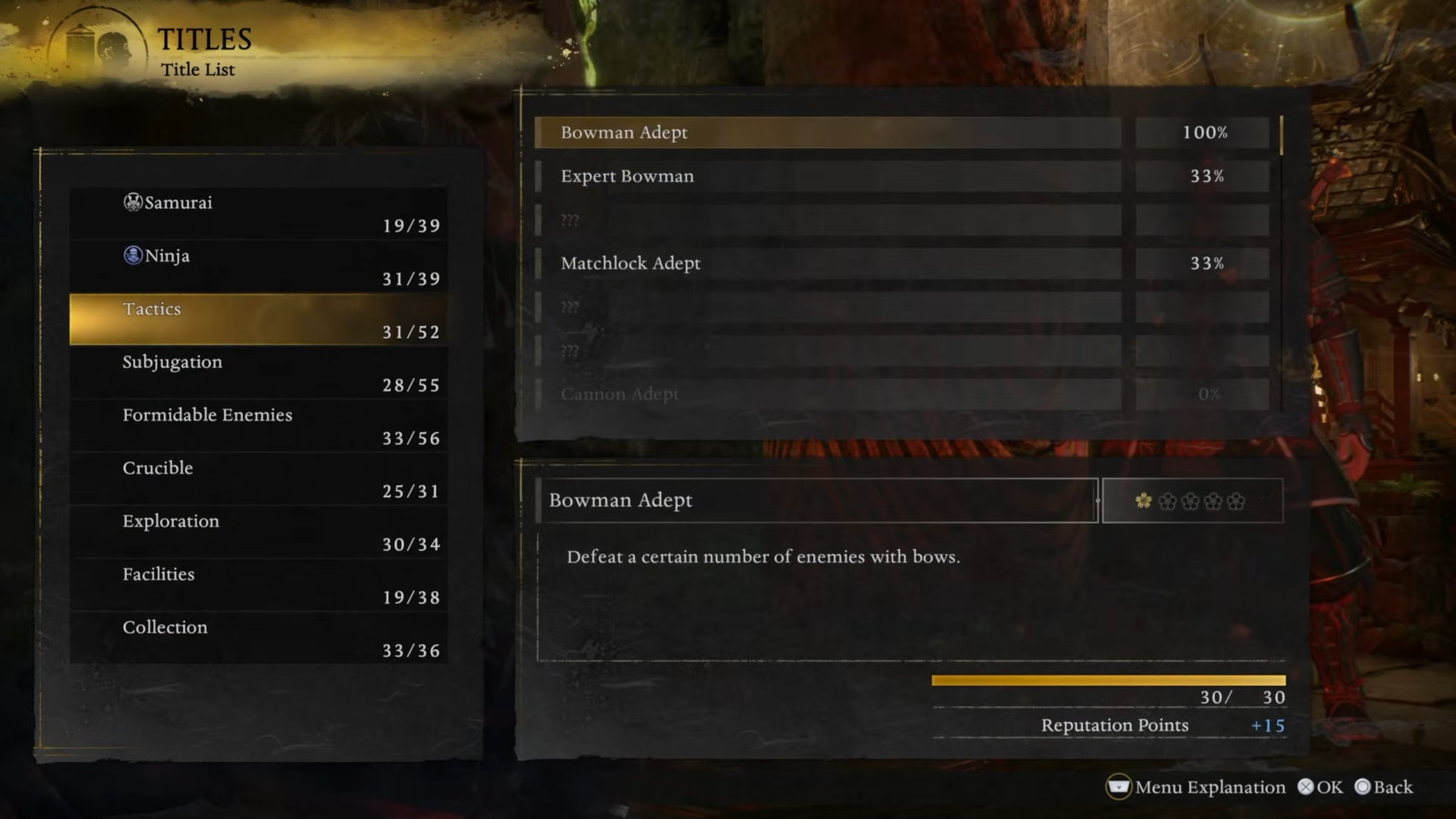
That visual repetition is your signal that you are getting close to or hitting a soft cap and should consider rotating into other bonuses instead.
How to prioritize your first prestige allocations
In the early to mid game, your main goal is to feel sturdier and hit harder without needing very specific gear to carry you.
That means you want to start with simple, always-useful stats rather than chasing small percentage gains that only shine with endgame numbers.

Core early-game priorities
- Life increases so you can survive mistakes, new boss patterns, and learning unfamiliar enemies.
- Ki and ki recovery so you can stay aggressive, block more, and avoid being punished after whiffed attacks.
- Toughness or similar stability boosts that reduce how easily you get staggered when you trade hits.
- General close combat damage that improves all your weapon swings, not just a narrow situation.
At this stage, leave drop rate boosts, gold gains, or other economic bonuses for later when you already feel comfortable with survival and damage.
How to maximize close combat damage from prestige
Close combat damage is one of the most important prestige lines, but it is also the one where it is easiest to waste points.
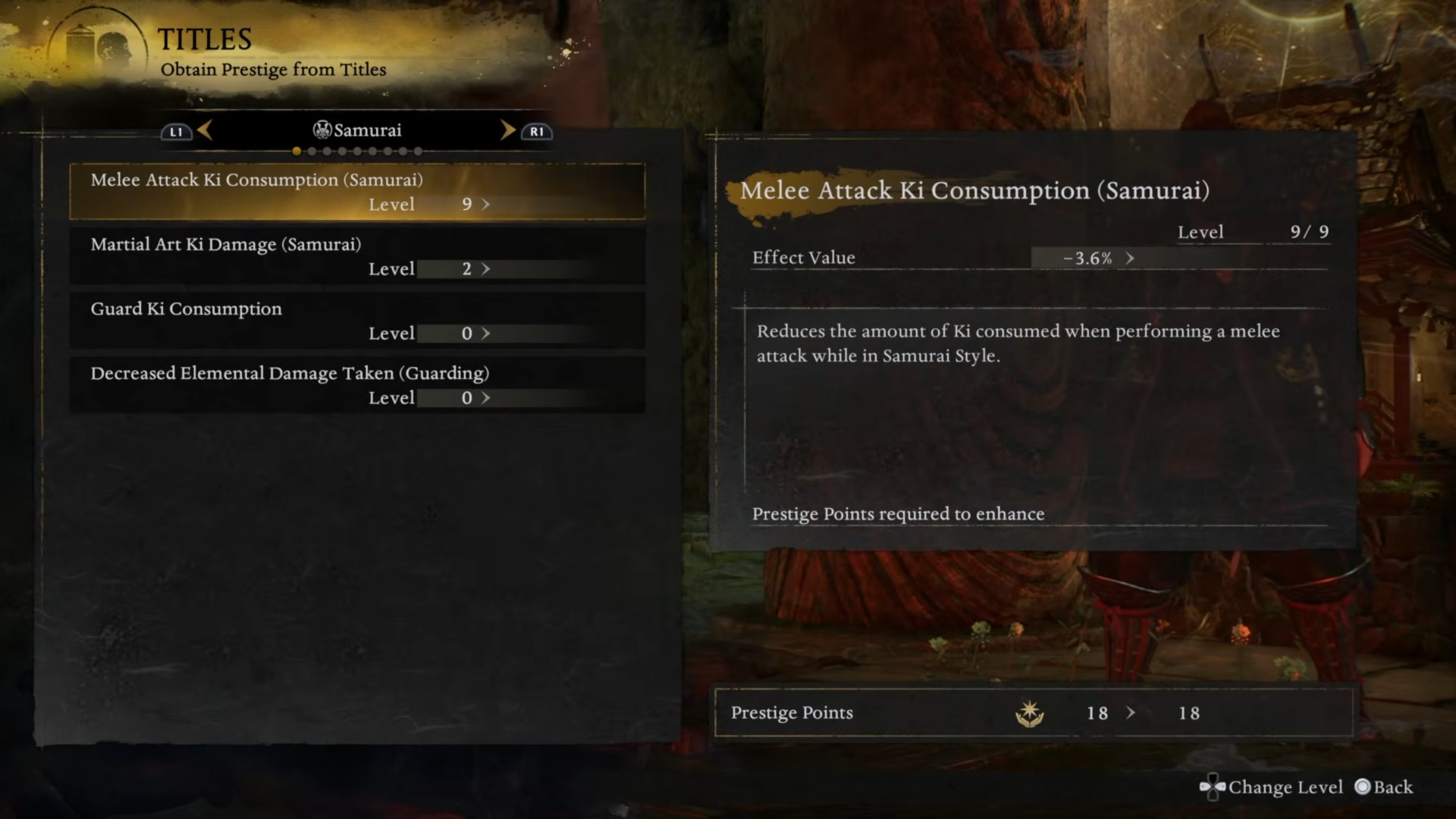
Each track offers bonuses to close combat damage versus humans and versus yokai, and both need to be handled carefully to reach their practical caps.
Understanding soft caps and repeated entries
As you sink points into a close combat damage bonus, the game will eventually present that same stat again in a new slot.
This is a sign that you have reached a threshold where the system wants you to diversify before pushing further on that same bonus.
The practical takeaway is that you should not tunnel on a single line until it stops moving; instead, you alternate between available close combat bonuses.
Rotating between human and yokai close combat damage across both tracks lets you raise your total multipliers without hitting those diminishing returns too early.
A simple rotation approach
- Focus first on yokai and human close combat damage until you notice repeats or very small gains.
- When you see that a stat reappears on a new row, switch over to the other damage type or another offensive stat for a while.
- Once both human and yokai close combat damage lines have hit healthy values, shift remaining points into survivability and utility.
This rotation pattern gives you more actual damage in practice than simply dumping everything into one line because the multipliers stack more efficiently.
How playstyle should change your prestige plan
Not every build uses prestige bonuses in the same way, and you should adjust your allocations to match how you fight.
The key is to match your most-used tools with the stats that scale them best.
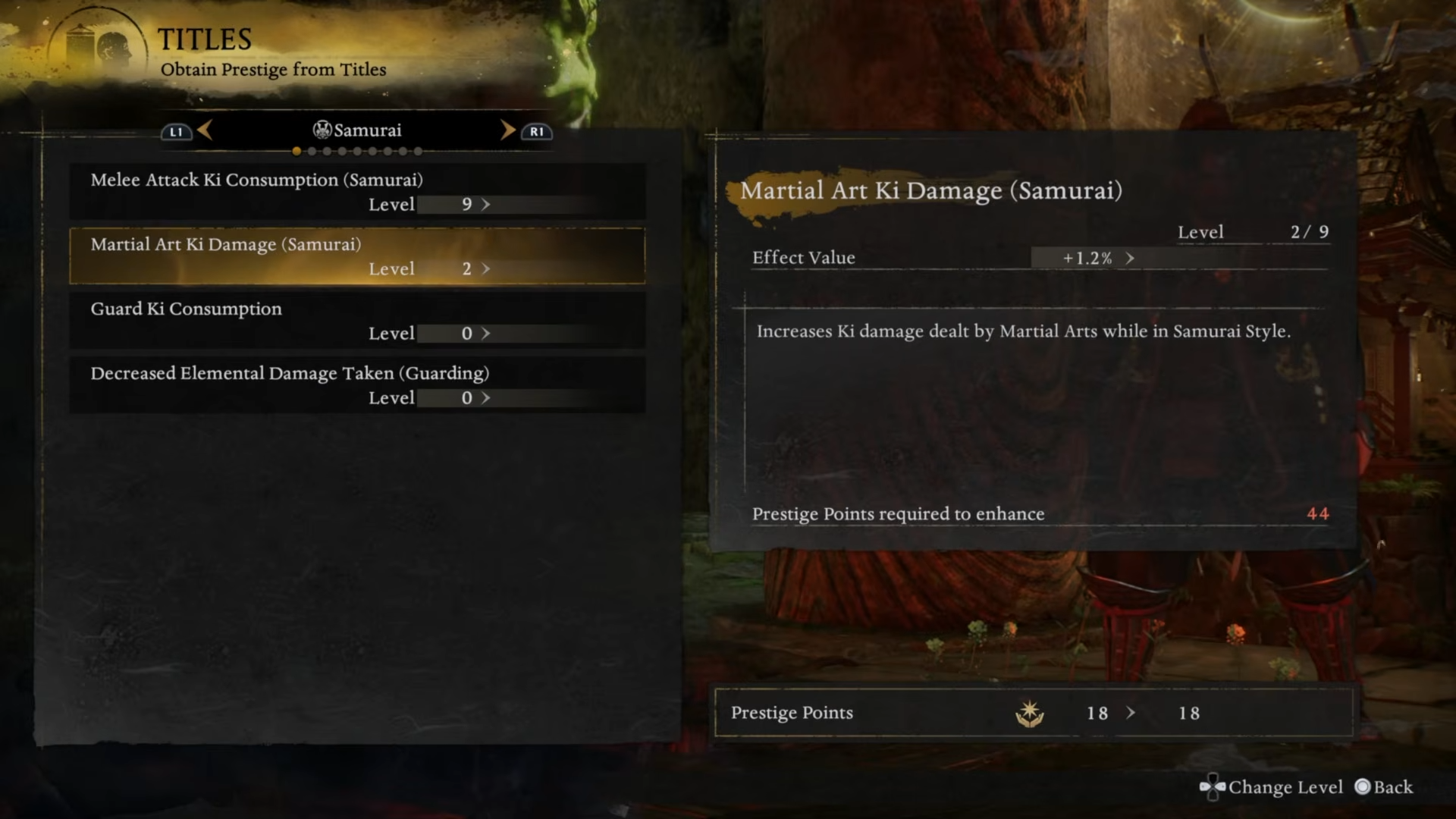
For melee-focused samurai builds
- Prioritize close combat damage vs human and yokai.
- Invest in ki and ki recovery to maintain pressure and stance switching.
- Add toughness so you can trade hits without getting knocked out of combos.
- Pick up life and damage reduction once your damage feels comfortable.
For ninjutsu or onmyo-heavy builds
- Raise ninjutsu power or onmyo power from relevant prestige lines as soon as they become available.
- Mix in close combat damage, because you still need your melee finishers to hit hard.
- Invest in ki recovery so you can weave spells or tools into your combos without gassing out.
For hybrid and late-game builds
- Cap out your core damage type first: either straight close combat or the scaling stat for your primary skills.
- Then layer in critical damage, elemental damage, or stance-specific boosts that line up with your main weapon techniques.
- Only after that should you start feeling comfortable putting points into drop rates, gold, or other quality-of-life bonuses.

How to use respecs and refine your allocations
Over time, you will unlock more titles, find better equipment, and possibly swap weapons or even entire playstyles.
Because of this, a prestige setup that felt perfect ten hours ago can easily become suboptimal after a few strong drops or a new build idea.
Whenever you make a major build shift, it is worth resetting your prestige allocations so they properly support your new direction.
Treat respecs as a normal part of progression rather than something you use only when you make a mistake.
A good rhythm is to check your prestige after:
- Finishing a main region or difficulty tier.
- Swapping to a new primary weapon or stance-focused playstyle.
- Unlocking a major chunk of titles that noticeably increases your available points.
How to build a practical allocation template
Instead of copying an exact layout, it helps to think in terms of percentages of your total prestige budget.
That way you can adapt as you gain more points without needing to redo everything from scratch.
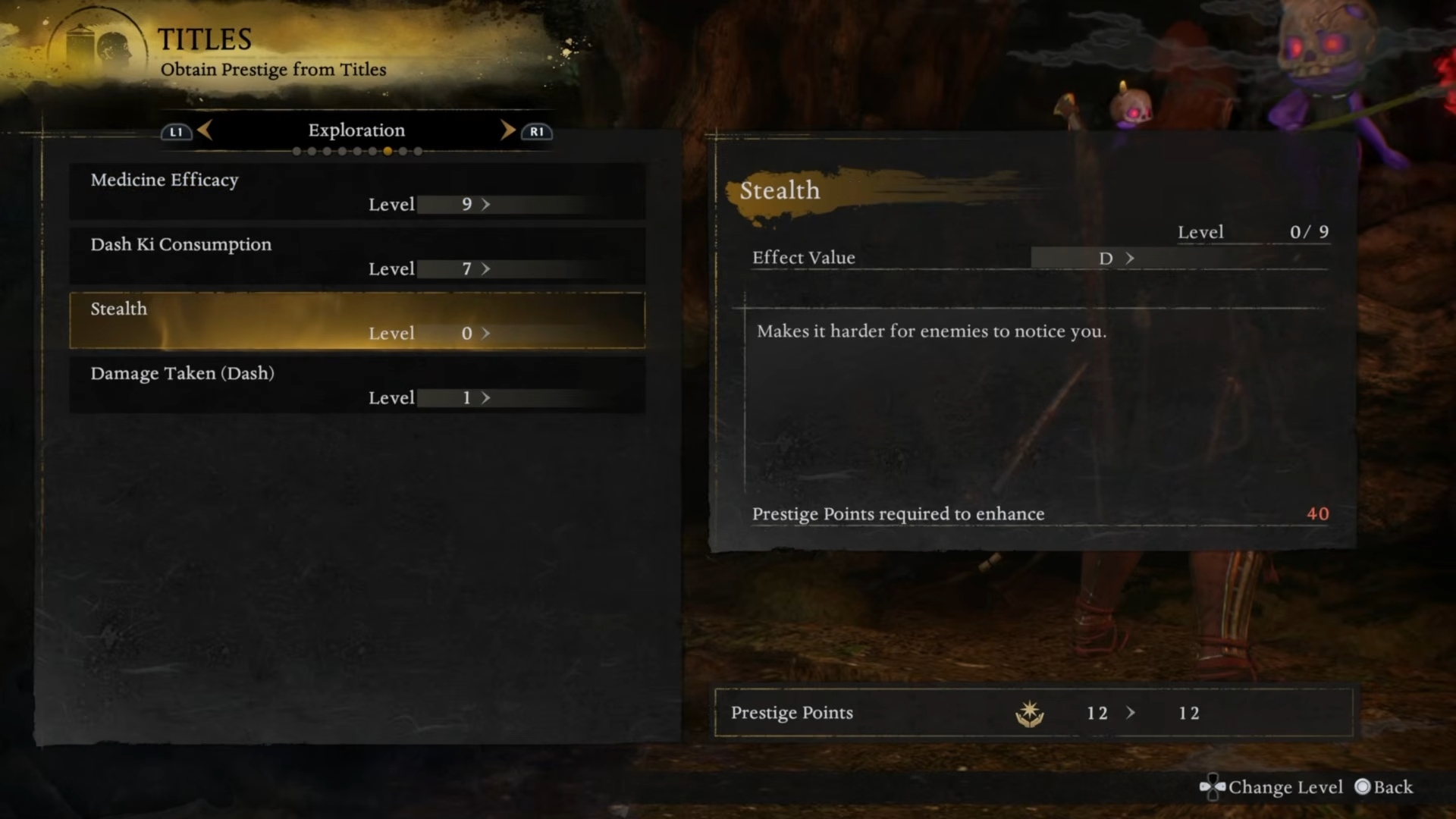
A practical template for most builds looks like this:
- Around one-third of your points into pure damage (close combat, yokai/human, or your main damage scaling stat).
- Around one-third into survivability (life, toughness, damage reduction, ki-related defense).
- The remaining third split between utility and specialization (crit, elemental damage, stance bonuses, drop rates, and niche perks).
You can skew this template more toward damage once you are very comfortable with enemy patterns and rarely die to basic mistakes.
How to approach utility and drop-focused perks
Utility perks generally feel weak early but become more valuable once your core stats are handled.
For example, increased elixir drop rate or other resource-focused bonuses shine more in long sessions or higher difficulties.
Do not rush into these while you still struggle with bosses or elite enemies.
Instead, only start integrating them once you feel you can consistently clear content without burning through elixirs or being forced into very cautious play.
When you finally do start to invest in drop-related bonuses, keep them as a smaller portion of your total prestige budget so they complement your build instead of defining it.
Example reward-focused prestige spread
Below is a high-level example of how reward and utility-related prestige perks might fit into a mature build.
| Category | Approximate share | Typical perks included |
|---|---|---|
| Core damage | 40–45% | Close combat, human/yokai bonuses, crit, scaling stats |
| Survivability | 30–35% | Life, toughness, damage reduction, ki safety |
| Build utility | 10–15% | Ki recovery, stance-specific boosts, elemental bonuses |
| Reward utility | 10–15% | Elixir drop rate, loot bonuses, other economy perks |
If you treat prestige as a flexible system rather than a permanent checklist, you will steadily increase both your damage and survivability without wasting points.
Rotate your close combat damage allocations, favor core performance over shiny utility early, and respec when your build changes so your titles always match how you actually play.