
- What to know
- Garden Horizons potato method details
- How to execute the potato method efficiently
- Understanding mutation value scaling
- Why selective deletion works
- Applying the method to wheat and other crops
- Profit optimization tips based on in-game mechanics
- Is the potato method worth it in Garden Horizons?
What to know
- The potato method focuses on multi-harvest crops with a strong base value.
- You stack Super, Basic, and Turbo Sprinklers for rapid regrowth.
- Delete normal crops and keep only silver and gold mutations.
- A focused 10–15-minute session can generate millions in-game.
In Garden Horizons, efficient farming is the difference between slow progress and exponential wealth. The so-called “potato method” has become one of the most reliable money-making strategies because it leverages mutation mechanics, sprinkler stacking, and rapid regrowth cycles. When executed correctly, you are not just farming potatoes — you are farming probability until rare, high-value variants dominate your harvest.
The method works with several crops, but potatoes stand out due to their strong base sell price, easy ground placement, and reliable multi-harvest behavior. If you understand how the regrowth system interacts with sprinklers, you can repeatedly cycle crops until only the most profitable variants remain.
Garden Horizons potato method details
| Element | Details |
|---|---|
| Recommended Crop | Potatoes (multi-harvest) |
| Required Tools | Super Sprinkler, Basic Sprinkler, Turbo Sprinkler, Shovel |
| Key Target | Silver and Gold mutations |
| Farming Duration | 10–15 minutes per cycle |
| Profit Potential | Millions depending on mutation luck |
| Works With | Potatoes, Wheat, other multi-harvest crops |
Why potatoes outperform most crops
Potatoes are ideal because they grow at ground level, which allows optimal sprinkler overlap. Their base value is already competitive, meaning that when a mutation occurs, the multiplier significantly increases the final sell price. Silver and gold variants dramatically boost earnings compared to regular harvests.

Multi-harvest crops are critical to this strategy. Instead of replanting every cycle, the plant continuously produces new crops. That mechanic allows you to repeatedly roll for better mutations without resetting the plant. You are essentially rerolling the crop outcome every few seconds under boosted growth conditions.
Wheat is another strong alternative because of its high base value and rapid growth speed, but potatoes remain more beginner-friendly and spatially efficient.
How sprinkler stacking accelerates growth
Sprinklers are the engine behind this strategy. Each type applies a different growth bonus, and when you combine them properly, you create a rapid regrowth loop.
| Sprinkler Type | Function | Impact on Method |
|---|---|---|
| Basic Sprinkler | Standard growth boost | Ensures consistent growth cycles |
| Turbo Sprinkler | Speeds up growth significantly | Enables rapid rerolls |
| Super Sprinkler | Strong overall enhancement | Maximizes mutation chances over time |
When stacked around a tight potato cluster, these sprinklers dramatically shorten regrowth time. This is what makes selective deletion viable. Without accelerated regrowth, deleting crops would slow you down. With stacking, new potatoes appear quickly enough to sustain a continuous mutation hunt.
The placement should ensure overlapping coverage so every potato benefits from all three sprinkler effects simultaneously.
How to execute the potato method efficiently
Step 1 – Preparing your farm layout
You want a compact farming area where every potato plant falls within the radius of all three sprinkler types. The tighter the grid, the more efficient the reroll cycle becomes. Leave enough space for movement so you can delete crops quickly without misclicking.
Step 2 – How to run the mutation farming cycle
- Place one Super Sprinkler, one Basic Sprinkler, and one Turbo Sprinkler so their ranges overlap across your potato patch. Make sure all plants are fully covered before starting the cycle.

- Plant your potatoes in a tight cluster within the stacked sprinkler radius. Wait for the first full growth cycle.
- Harvest the fully grown potatoes. Immediately check for silver or gold variants. These are your profit targets.
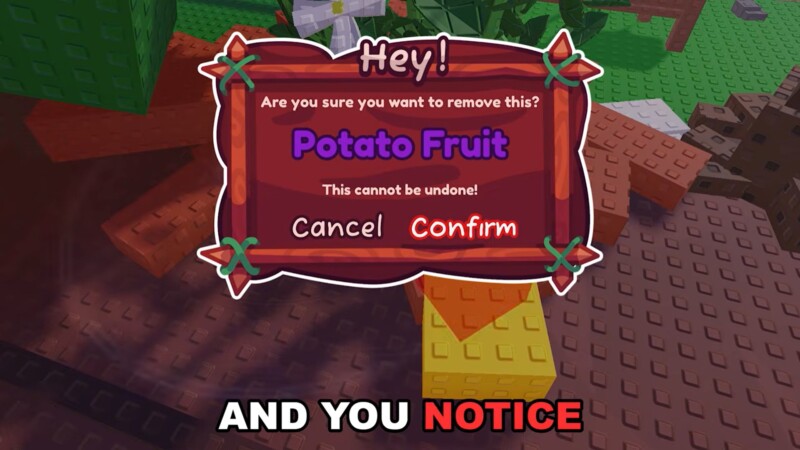
- Use your shovel to delete all normal potatoes. Do not remove silver or gold variants. Leave high-value mutations intact.
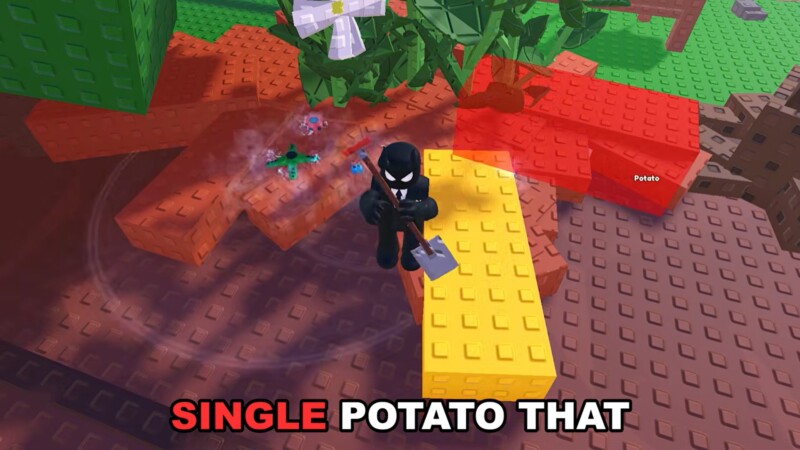
- Allow the plants to regrow under sprinkler acceleration. Because potatoes are multi-harvest, new crops will appear rapidly.
- Repeat the deletion process, continuously removing low-value outcomes while keeping silver and gold mutations.
- Continue this cycle for approximately 10–15 minutes. The stacked sprinkler effect ensures frequent regrowth, increasing the statistical chance of spawning multiple high-value variants.

Over time, your patch gradually becomes dominated by higher-value crops because you consistently remove the weaker results.
Understanding mutation value scaling
Mutation rarity significantly affects selling price. While regular large potatoes can still be profitable, silver and gold mutations multiply the base value far beyond standard yields.
| Mutation Type | Relative Value | Strategy Priority |
|---|---|---|
| Normal | Base value | Delete |
| Large | Slightly higher | Optional |
| Silver | High multiplier | Keep |
| Gold | Very high multiplier | Always keep |
By focusing only on silver and gold, you maximize return per harvest cycle rather than per plant.
Why selective deletion works
The core logic behind this method is probability cycling. Each regrowth event is effectively another chance to roll a rare mutation. Because sprinklers drastically reduce growth time, you can force dozens of mutation rolls within a short window.
Instead of accepting average output, you actively filter for premium outcomes. Over a 10–15 minute session, this can generate income far beyond passive farming methods.
This strategy also scales well. As you expand your sprinkler coverage and crop count, your mutation rolls increase proportionally. The more cycles you complete, the greater your chance of stacking multiple gold variants simultaneously.
Applying the method to wheat and other crops
While potatoes are recommended, wheat also performs exceptionally well due to strong base pricing and fast regrowth speed. The same sprinkler stacking and deletion principles apply.

When testing alternative crops, consider three factors. The crop must be multi-harvest, have a competitive base value, and respond well to sprinkler acceleration. If those conditions are met, the potato method logic remains effective.
Profit optimization tips based on in-game mechanics
Positioning is crucial. Ground crops allow tighter sprinkler overlap compared to taller plants. Compact layouts reduce travel time when deleting crops. Keeping your shovel equipped during cycles prevents unnecessary menu switching.
Timing also matters. Focus on uninterrupted 10–15 minute sessions rather than passive monitoring. Active management significantly increases mutation filtering efficiency.

Finally, reinvest your early profits into additional sprinklers. More coverage equals more mutation rolls, which compounds earnings.
Is the potato method worth it in Garden Horizons?
As of current gameplay trends in Garden Horizons, mutation farming remains one of the most consistent high-income strategies. Unlike limited-time events or fluctuating market mechanics, this method relies on core growth systems that remain stable.
If you want predictable scaling income rather than risky speculation, this method offers repeatable, controllable profitability. While luck still plays a role in mutation frequency, active filtering ensures you extract maximum value from every growth cycle.
The potato method transforms simple farming into a high-efficiency mutation engine. By stacking sprinklers, aggressively deleting low-value crops, and focusing only on silver and gold variants, you turn probability into profit. If you commit to active farming sessions and optimize your layout, you can realistically scale toward millions in-game without relying on rare drops or event bonuses.