
- What to know
- How the blacksmith system generates Lacquer
- Why headgear yields more Lacquer than other armor
- Quality tiers and material scaling
- Efficient Lacquer farming through gear accumulation
- Selling Lacquer after dismantling
- Comparing Lacquer farming to direct material drops
- Crafting relevance and long-term use
- Building a steady Lacquer supply
What to know
- Lacquer is a blacksmith crafting material used for forging, reforging, and upgrading gear.
- Disassembling headgear is currently the most reliable source.
- Higher-rarity items yield higher-quality Lacquer.
- You obtain it primarily through the Blacksmith in the Eternal Rift hub.
If you are upgrading gear regularly in Nioh 3, you will run into Lacquer as one of the most consistently required materials. Unlike mission-specific drops or rare crafting components tied to bosses, Lacquer comes from a system you can control directly. That makes understanding how to farm it efficiently important, especially once forging and reforging become part of your build progression.
| Category | Details |
|---|---|
| Material Type | Smithing / Crafting material |
| Primary Use | Forging, reforging, upgrading armor and weapons |
| Main Source | Disassembling head armor at Blacksmith |
| Quality Levels | Common, Quality, High-Quality (based on gear rarity) |
| Best Farming Method | Dismantling headbands and face masks |
| Hub Location | Blacksmith at Eternal Rift |
Lacquer functions as a conversion material. You do not normally find it as a direct world pickup in consistent quantities. Instead, it is generated from dismantling equipment, which means your farming strategy revolves around gear acquisition rather than chest routes or boss farming.
How the blacksmith system generates Lacquer
The Blacksmith in Nioh 3 operates similarly to previous entries in the series. After progressing far enough to unlock hub access, you can visit the Eternal Rift and interact with the blacksmith. Inside the menu, you select the disassemble option to break down unwanted gear into crafting components.
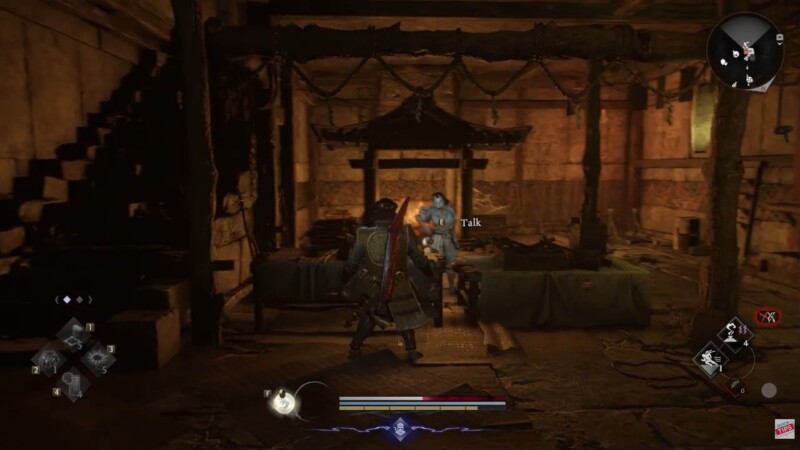
What is especially important is that not all gear types produce Lacquer equally. Based on player testing and community confirmation, head items produce Lacquer at the highest and most consistent rate. These include headbands, helmets, and face masks. When dismantled, these armor pieces commonly convert into Lacquer rather than wood, leather, or ingots.
This makes headgear uniquely valuable even when its stats are poor.
Why headgear yields more Lacquer than other armor
Armor pieces in Nioh 3 are internally categorized by type. When dismantled, each category converts into different material pools. Weapons often yield metal-based materials, chest armor tends to produce leather or cloth-based components, while headgear is more closely associated with Lacquer.
The tutorial breakdown from recent gameplay footage confirms that headbands and face masks are primary Lacquer sources. When dismantled in bulk, they consistently return this material.
| Equipment Type | Typical Material Yield | Lacquer Drop Rate |
|---|---|---|
| Weapons | Ingots / Metal | Low |
| Chest Armor | Leather / Cloth | Low |
| Leg Armor | Cloth / Mixed | Moderate |
| Headgear | Lacquer | High |
| Face Masks | Lacquer | Very High |
The data reflects observed player testing rather than fixed internal percentages, but the pattern is consistent enough to form a reliable farming strategy.
Quality tiers and material scaling
Lacquer exists in multiple quality tiers, which correspond directly to the rarity of the gear you dismantle. If you dismantle common white-rarity headgear, you will receive basic Lacquer. Blue, purple, and higher-tier gear increases the chance of receiving higher-quality Lacquer variants.
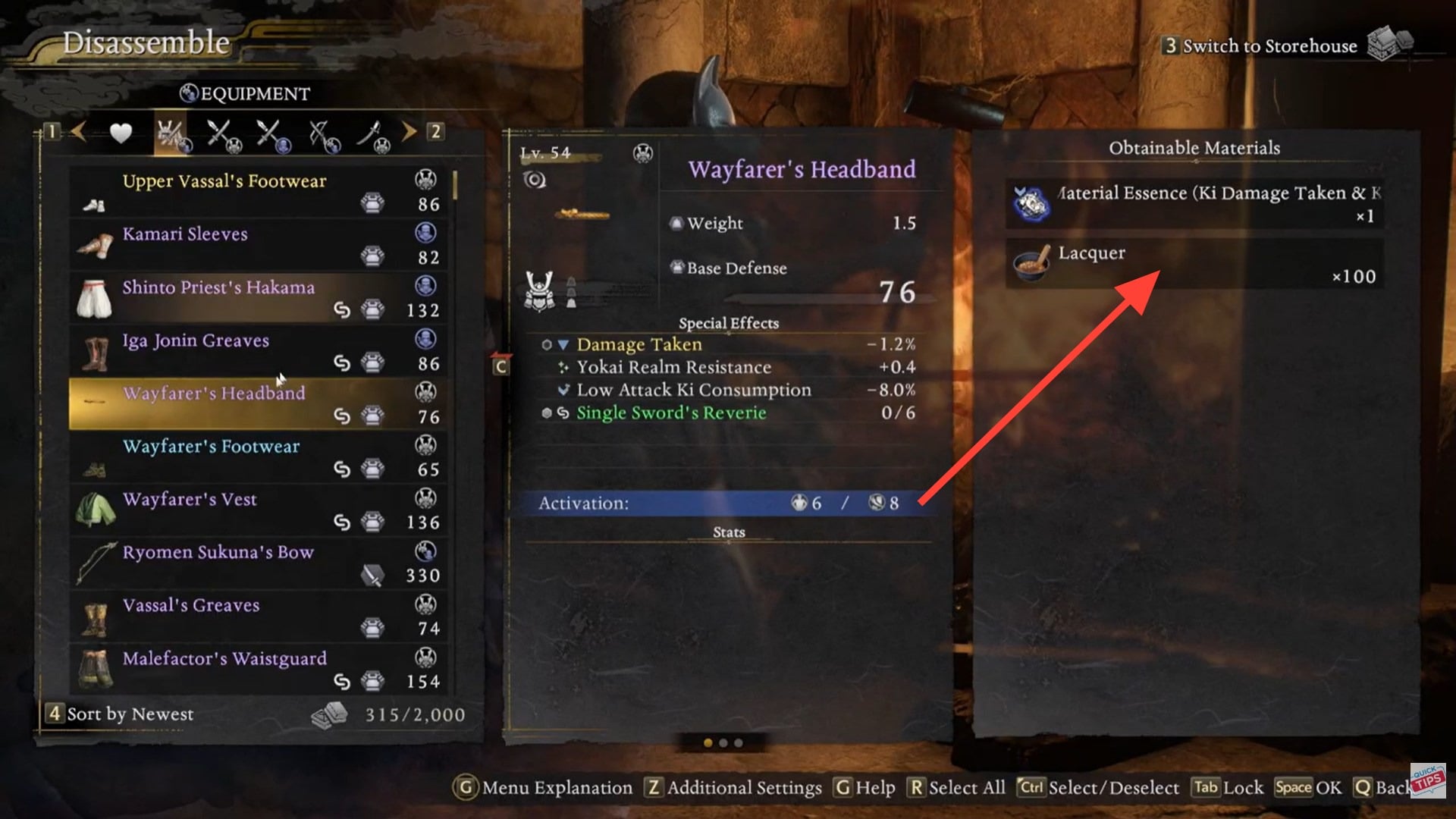
This matters because forging high-level equipment often requires upgraded material tiers.
| Gear Rarity | Material Quality Output |
|---|---|
| Common (White) | Basic Lacquer |
| Uncommon (Blue) | Quality Lacquer |
| Rare (Purple) | High-Quality Lacquer |
| Exotic+ | Higher-tier material variants |
If you are targeting endgame crafting, dismantling higher rarity headgear becomes more efficient than farming early-game items in bulk.
Efficient Lacquer farming through gear accumulation
Because Lacquer comes from dismantling, your real goal is to maximize headgear drops. The most reliable methods include replaying missions with dense enemy spawns, farming revenants for equipment, and clearing side missions that drop multiple armor pieces.
You do not need to target specific map locations for Lacquer itself. Instead, focus on content that produces large quantities of loot. Once your inventory fills with unwanted headgear, return to the Blacksmith and convert it into materials.
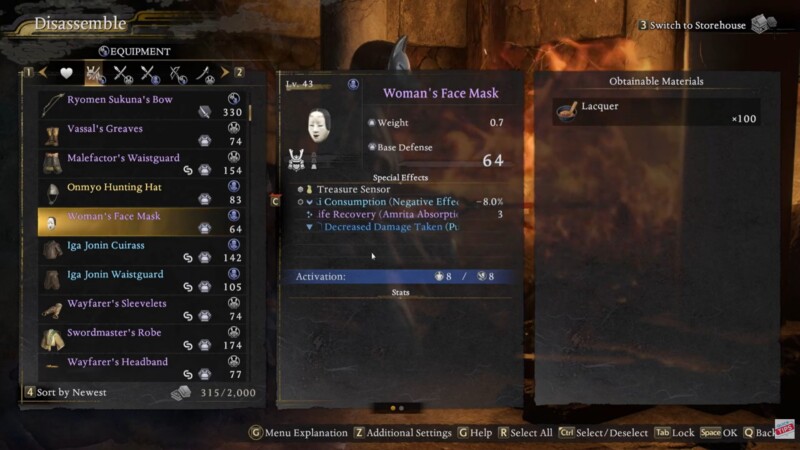
An important optimization step is inventory filtering. Before dismantling, sort by armor type and isolate headgear to streamline bulk disassembly. This reduces time spent manually scanning your inventory.
Selling Lacquer after dismantling
Once dismantled, Lacquer becomes part of your material inventory. If you are not actively crafting, you can sell excess Lacquer for currency. This is useful early in the game when gold shortages can slow forging experimentation.
However, most players recommend holding onto higher-tier Lacquer, as crafting requirements increase sharply later in progression.
| Action | Outcome |
|---|---|
| Dismantle Headgear | Gain Lacquer |
| Sell Lacquer | Gain Gold |
| Use Lacquer | Forge / Upgrade Equipment |
The flexibility to either craft or sell makes it a valuable material at every stage of progression.
Comparing Lacquer farming to direct material drops
Unlike certain smithing materials in earlier entries like Nioh and Nioh 2, where specific missions sometimes had more defined material drop pools, Nioh 3 currently leans more heavily into the dismantling economy. That means gear management is directly tied to crafting progression.
You are not farming Lacquer directly from enemies in a predictable way. You are farming gear, then converting that gear into Lacquer. Once you understand that loop, material acquisition becomes far more controlled.
Crafting relevance and long-term use
Lacquer becomes more important the deeper you move into equipment optimization. Forging specific armor sets, rerolling stats, and refining builds all require steady material input. If you neglect dismantling early, you may hit a material wall when trying to craft late-game pieces.
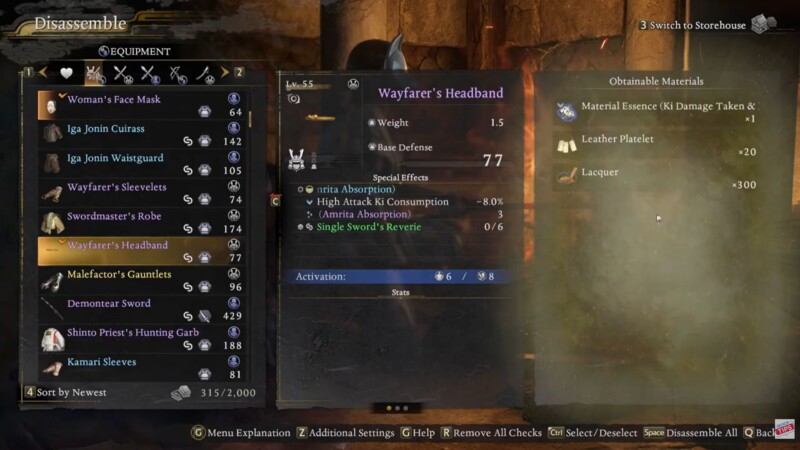
The best long-term strategy is to dismantle unwanted headgear consistently instead of selling it outright. Over time, this builds a stable supply of Lacquer across quality tiers.
Building a steady Lacquer supply
Lacquer in Nioh 3 is not rare once you understand its source. The key is recognizing that headgear equals Lacquer. By farming equipment efficiently and using the Blacksmith’s dismantle function strategically, you maintain a steady crafting material pipeline without relying on random world drops.
If you make dismantling headgear part of your regular gear management routine, you will rarely find yourself short on Lacquer when it matters most.