What to know
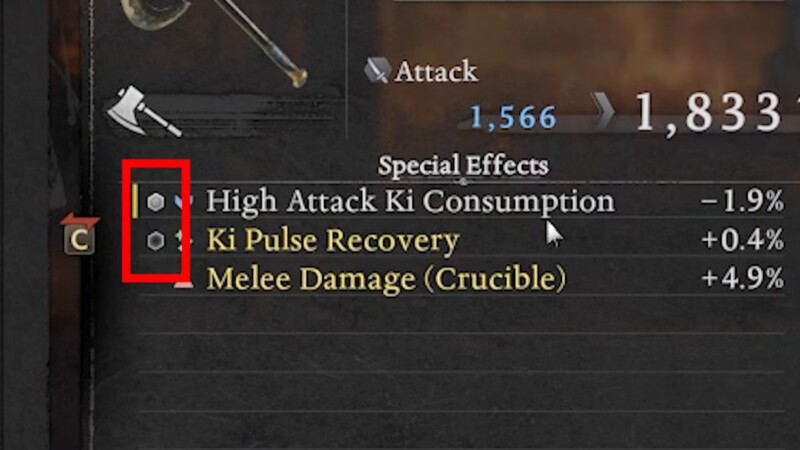
- White hexagons mean the stat is fixed and normally cannot be re-rolled.
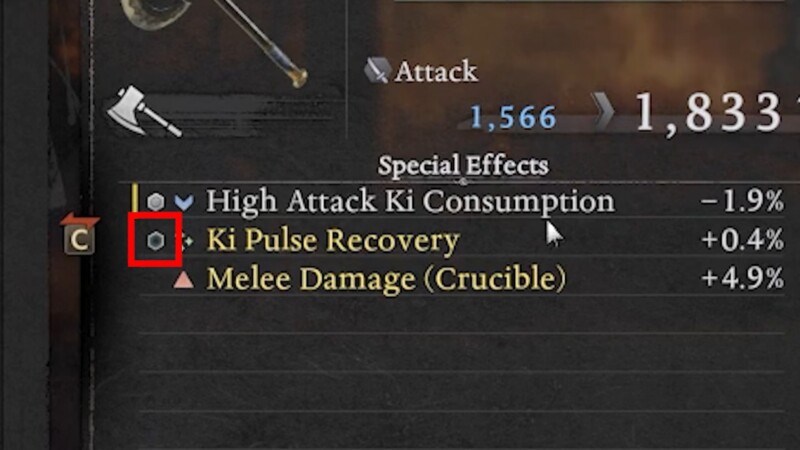
- Black hexagons mean Umbracite is required to re-roll that line.
- Set bonuses with white hexagons are inherent and locked to the item.
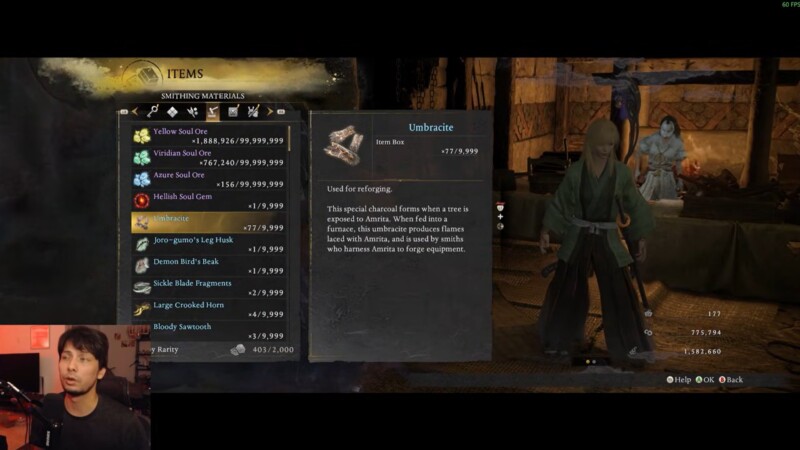
- Umbracite is a rare reforging material obtained from drops or select vendors.
In Nioh 3, gear optimization revolves around affix management. Every weapon and armor piece rolls with AICS lines, and each of those lines determines bonuses like damage boosts, Ki recovery, elemental scaling, or utility modifiers. The small hexagon icons beside those lines determine whether you can alter them.
Understanding these icons saves massive amounts of time and materials at the blacksmith.
What white hexagons denote
A white hexagon next to an AICS line indicates that the stat is inherent to the item. It is part of that weapon or armor’s design and does not function like a random roll.
When you visit the blacksmith’s reforge menu, white-hexagon lines typically cannot be re-rolled or removed. They are permanently attached to that item.
| Hexagon Type | Meaning | Reforgeable? |
|---|---|---|
| White Hexagon | Inherent / fixed affix | No (with rare exceptions) |
| No Hexagon | Random roll affix | Yes |
| Black Hexagon | Special locked line | Yes, but requires Umbracite |
This is especially important for named weapons and armor sets.
White hexagons and set bonuses
Set bonuses may also appear with white hexagons. When this happens, it means the set bonus is intrinsic to the item and cannot be replaced.
However, there is a key distinction reported across player testing and community breakdowns. If a set bonus rolled naturally as part of RNG on a dropped item, it may be re-rolled—but not into another set bonus.
| Set Bonus Type | Re-rollable? |
|---|---|
| Inherent (White Hexagon) | No |
| RNG Dropped Set Bonus | Yes, but not into another set bonus |
This subtle difference has been confirmed through player experimentation in reforging menus.
What black hexagons denote
A black hexagon indicates that the line requires Umbracite to re-roll.
This is where many players get confused. Black hexagon lines are not permanently fixed like white ones. They are technically modifiable, but the blacksmith will require Umbracite instead of standard reforging materials.
Umbracite is a rare crafting currency used to manipulate higher-tier affixes.
| Black Hexagon Line | Requires |
|---|---|
| Reforge Attempt | Umbracite |
| Standard Gold Only | Not sufficient |
| Drop Source | Rare enemies & bosses |
Without Umbracite, you cannot alter these lines.
What is Umbracite and how to use it
Umbracite is a rare reforging material that allows you to modify affixes marked by black hexagons.
It can be obtained through:
- Rare enemy and boss drops
- Select Kodama merchants
- Specific region-based vendors
Community sources confirm that most Kodama do not stock Umbracite regularly, but certain vendors—particularly those in later or specific historical arcs such as the Han period—may sell it for approximately 3,000 currency.
| Source | Availability |
|---|---|
| Monster Drops | Rare |
| Boss Drops | Rare |
| Kodama Vendor | Limited, region-specific |
| Cost (Vendor) | ~3,000 currency |
Because of its rarity, Umbracite should be used strategically.
How reforging works with hexagons
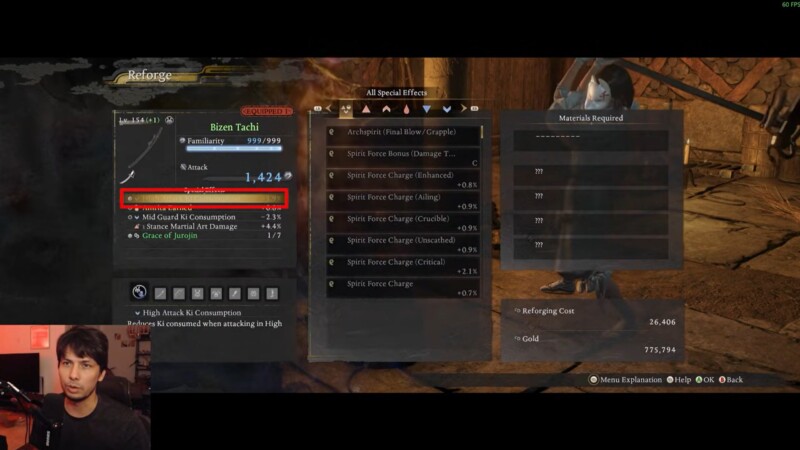
When you enter the blacksmith reforge menu, each affix line behaves differently depending on its icon.
| Icon | Behavior in Reforge Menu |
|---|---|
| No Icon | Can be freely re-rolled |
| White Hexagon | Locked (cannot be changed) |
| Black Hexagon | Requires Umbracite |
Attempting to re-roll a black hexagon line without Umbracite will prevent the action entirely.
Why this matters for endgame builds
At higher levels, gear optimization revolves around stacking specific damage modifiers or survivability bonuses. If a powerful stat is marked with a white hexagon, you must decide whether the item’s base design aligns with your build, because you cannot remove that affix.
Black hexagon lines are more flexible, but at the cost of Umbracite.
| Optimization Scenario | Hexagon Impact |
|---|---|
| Perfect RNG drop | Easier to adjust |
| Named weapon build | White hexagon limits flexibility |
| Min-max elemental build | Black hexagon lines require Umbracite investment |
Players frequently discuss on forums how white hexagon lines determine whether an item is worth long-term investment.
Common misconceptions about hexagon colors
Some players confuse white hexagons with rarity tiers. While rarity affects color coding of gear, hexagons specifically relate to reforge behavior.
The hexagon does not indicate power level alone. It indicates control.
White equals permanent.
Black equals controllable—but costly.
Strategy for managing Umbracite
Because Umbracite is rare, it is recommended to:
- Use it only on gear that already has strong synergy.
- Avoid spending it on mid-tier equipment.
- Reserve it for high-level or set-synergy builds.
| Use Case | Worth Spending Umbracite? |
|---|---|
| Early Game Gear | No |
| Mid-Tier Farming Weapon | Situational |
| Endgame Build Core Piece | Yes |
The material becomes increasingly valuable in late-game min-max scenarios.
Relationship between hexagons and inheritable affixes
In Nioh 3, white hexagons mark fixed, inherent affixes that cannot be re-rolled, while black hexagons mark affixes that require Umbracite to modify. Umbracite is a rare reforging resource obtained from select enemies and vendors.
Another icon sometimes seen on gear is a triangular or arrow-like marker indicating an inheritable affix. These differ from hexagons entirely.
| Icon Type | Meaning |
|---|---|
| Hexagon | Fixed or Umbracite-dependent affix |
| Triangle / Arrow | Inheritable affix transferable via soul matching |
Understanding this distinction prevents costly mistakes when planning gear progression.
These icons directly determine how much control you have over an item’s stats. If you plan to optimize builds deeply, recognizing the difference between permanent and Umbracite-dependent lines is essential.
Once you understand the system, gear evaluation becomes much more strategic and efficient.