
What to know
A recently discussed mobile app went viral after being described as a “racist app to track Black people.”
The developer framed it as honoring Black History Month, drawing attention online.
Critics say it uses names and maps in ways that promote harmful stereotypes.
Civil rights advocates argue this approach can lead to profiling and misinformation.
You might have spotted an image or social-media post claiming a developer released a mobile application designed to let users “track Black people.” According to posts circulating in the last day or two, the app lets users filter a map by names often linked to Black Americans and overlays crime data, and its creator described it as being made in honor of Black History Month.
The attention around this app isn’t because of a mainstream release in a major app store, but because of how it was presented and shared on social platforms. Those posts highlight that the app ties names and geographic areas to crime statistics in a way that many see as simplistic and prejudicial.
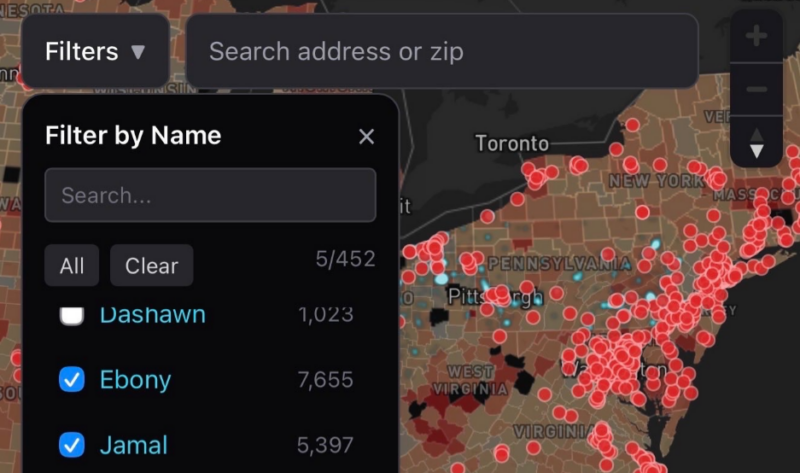
Civil rights advocates quoted in the discussions argue that any tool that suggests a person’s race, danger level, or criminality based on their name or location can encourage racial profiling rather than help people stay safe. They emphasize that crime data is complex and cannot ethically be reduced to simplistic associations with identity or community.
Tools that aggregate crime information and show it on maps already exist in mainstream safety apps, but responsible services make clear that data has limitations and should never be used to make assumptions about individuals. Apps that blur these lines invite criticism because they can reinforce harmful assumptions about race and criminality. Technology and mapping have long intersected with debates about bias. Navigation and safety apps that provide neighborhood data must balance public safety with avoiding reinforcing stereotypes. Platforms like Nextdoor have previously revised features to reduce racial profiling after user-generated content raised concerns.
Responsible developers and civil rights groups alike say that any public tool using race or racially associated data must be evaluated not just on technical accuracy but on ethical impact. Reducing human beings to data points based on names or demographics without context can deepen mistrust and social divisions.