- What to know
- Arknights Endfield Depot Bus system details
- What the Depot Bus actually does
- Why Amethyst Bottle production benefits from the Depot Bus
- How to unlock and set up the Depot Bus
- How Depot Loaders work in practice
- How Depot Unloaders feed production lines
- End-to-end Amethyst Bottle automation flow
- Layout considerations and efficiency tips
- Common mistakes to avoid while using Depot Bus
- Amethyst bottles farming explained
What to know
- The Depot Bus moves items between your factory and Depot storage
- Depot Loaders send items into the Depot, Unloaders pull them back out
- This system bypasses PAC output port limitations
- It’s ideal for managing mid-tier items like Amethyst Bottles
As your AIC factory grows in Arknights Endfield, belt-based logistics alone start to show their limits. Output ports clog, long belt routes eat space, and intermediate materials pile up where they aren’t needed. The Depot Bus system exists specifically to solve these problems, acting as a shared logistics backbone between your factory and your Depot storage.
This guide explains how the Depot Bus works, how Depot Loaders and Unloaders interact with it, and how to use the system to reliably produce and reuse Amethyst Bottles without constant rerouting.
Arknights Endfield Depot Bus system details
| Component | Role |
|---|---|
| Depot Bus Port | Entry point for the bus network |
| Depot Bus Sections | Extend the bus line across your AIC |
| Depot Loader | Sends items from belts into the Depot |
| Depot Unloader | Pulls items from the Depot onto belts |
| Best use case | Intermediate material storage and reuse |
What the Depot Bus actually does
The Depot Bus is a shared transport layer that sits between your production lines and your Depot. Instead of routing every product directly to a PAC output port or manually looping belts back toward storage, the bus lets you inject items into the Depot from anywhere and retrieve them later where they’re needed.
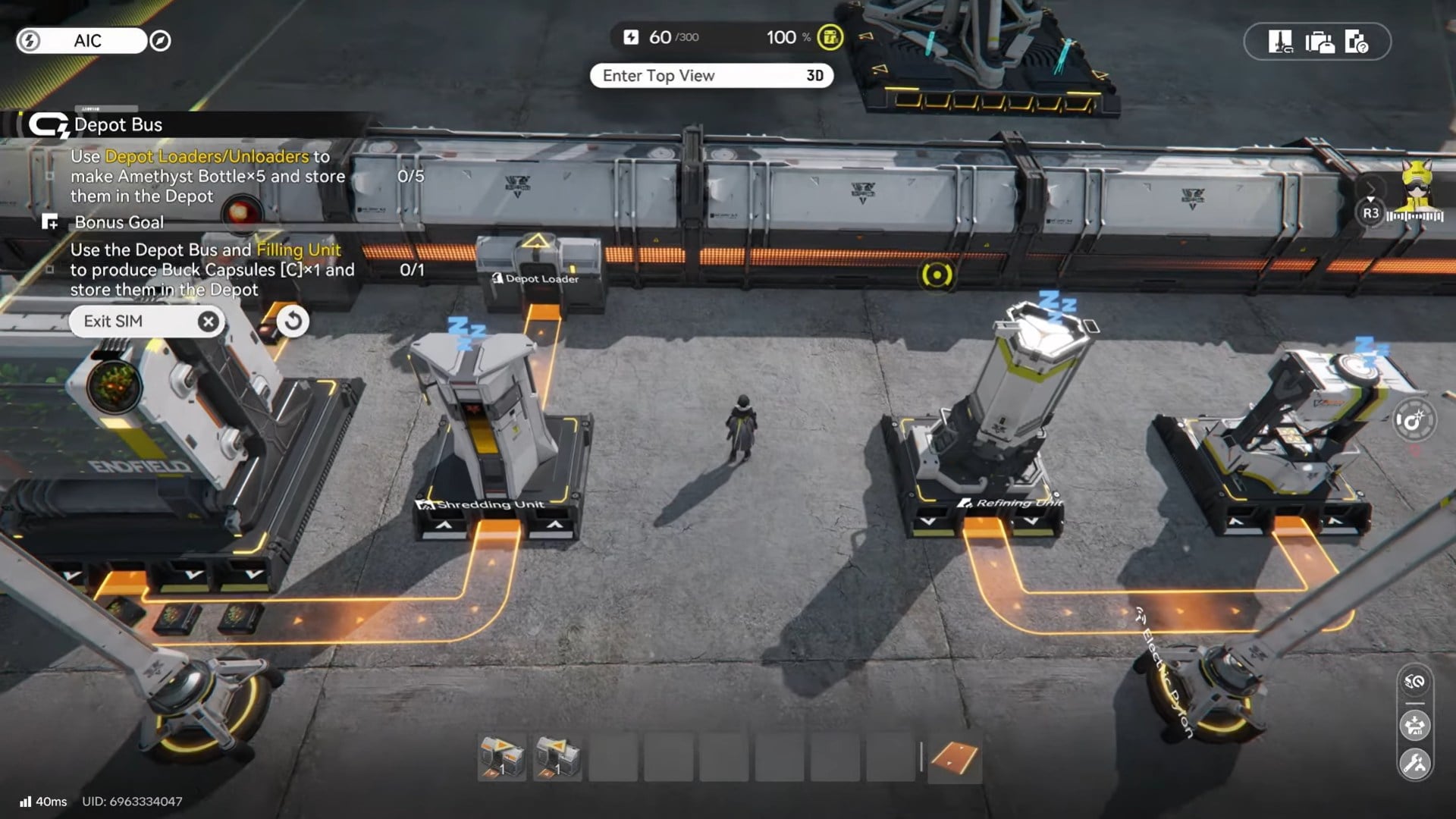
Depot Loaders and Unloaders are the key pieces. A Loader takes items off a belt and stores them automatically. An Unloader does the reverse, pulling items from storage and feeding them into machines. Together, they turn the Depot into an active logistics hub rather than a passive container.
Why Amethyst Bottle production benefits from the Depot Bus
Amethyst Bottles are a classic mid-tier bottleneck item. They’re not raw enough to consume immediately, and not final enough to always export. Many recipes need them at different times and in different places, which makes direct belt routing messy.
Using the Depot Bus, you can centralize Amethyst Bottle storage, then distribute bottles to multiple production lines on demand. This keeps belts short, output ports free, and production flexible.
How to unlock and set up the Depot Bus
Step 1: Unlock the Depot Bus technology
Progress through AIC Steward and logistics research until the Depot Bus node becomes available. Without this, Loaders and Unloaders cannot be built.
Step 2: Place a Depot Bus Port
The Bus Port anchors the system. Place it in your core AIC area where multiple production lines can reasonably connect.
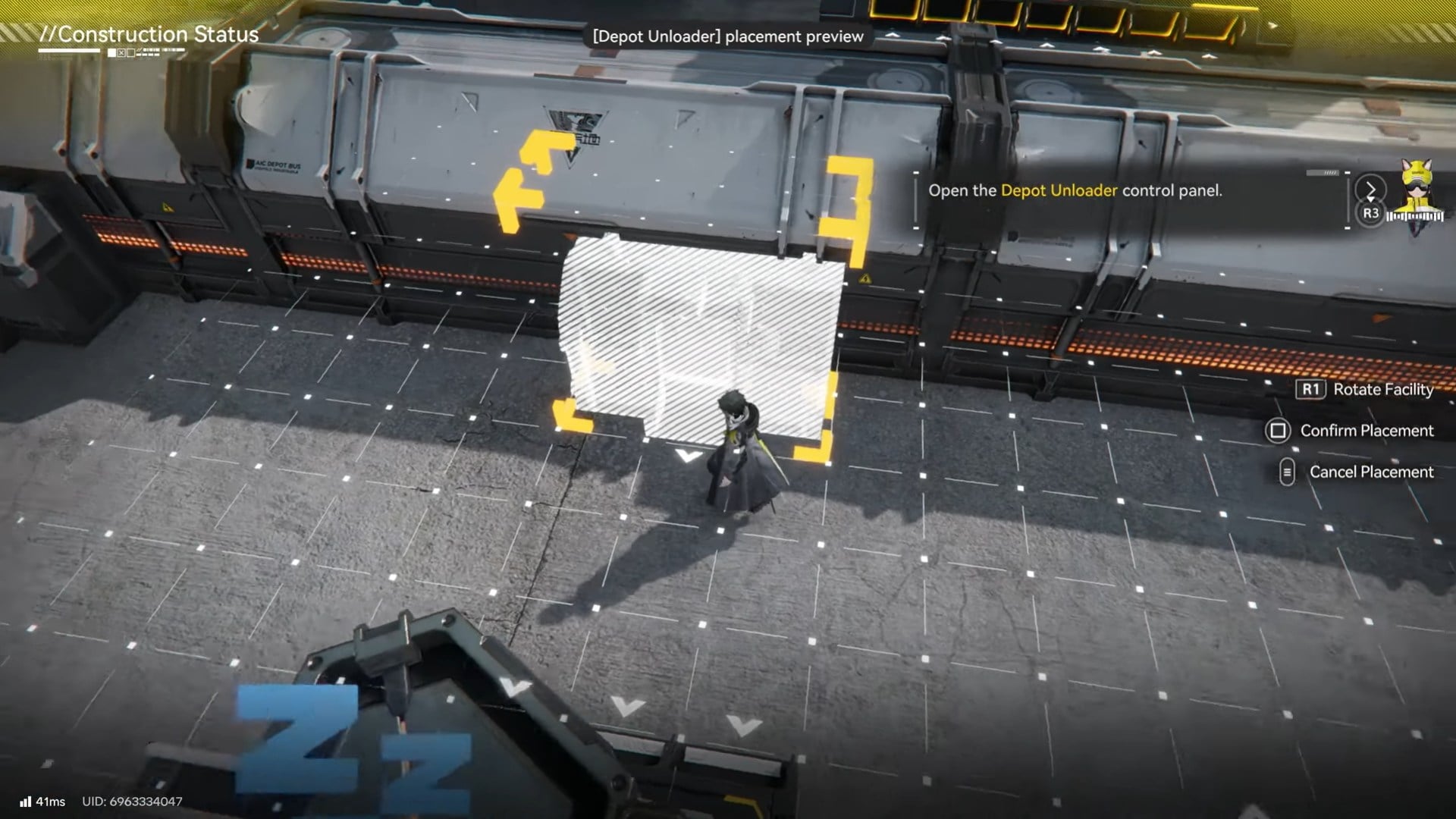
Step 3: Extend the bus with sections
Use Depot Bus Sections to extend the bus toward high-traffic production areas, such as refining and moulding clusters.
How Depot Loaders work in practice
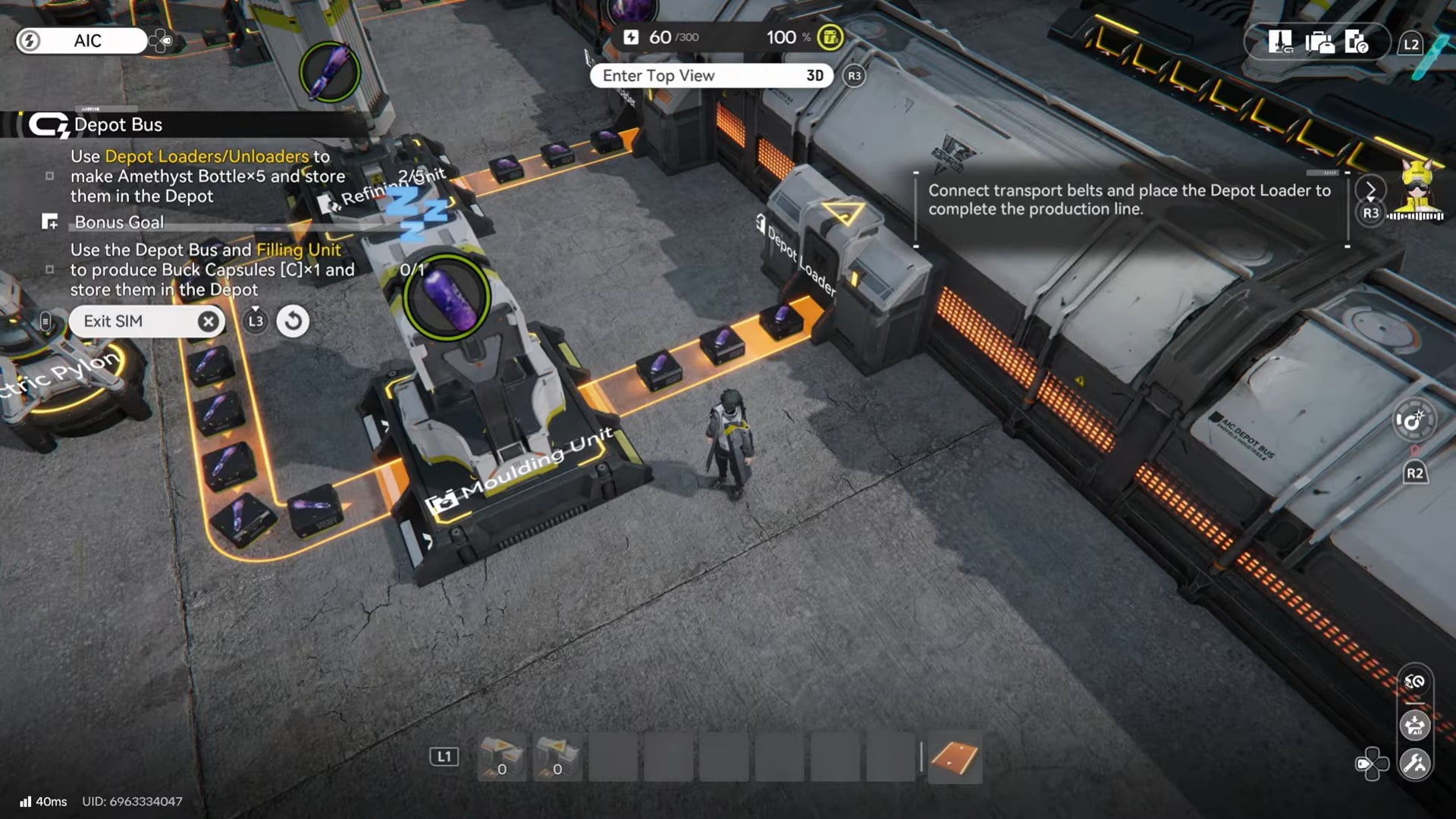
Depot Loaders are used when you want to export items from production into storage. You connect a transport belt from a machine’s output directly into the Loader. Once powered, any item on that belt is automatically transferred into the Depot.
For Amethyst Bottles, the Loader is typically placed right after a Moulding Unit. Instead of letting bottles back up on belts or forcing them into limited PAC outputs, the Loader absorbs the excess and keeps production running smoothly.
How Depot Unloaders feed production lines
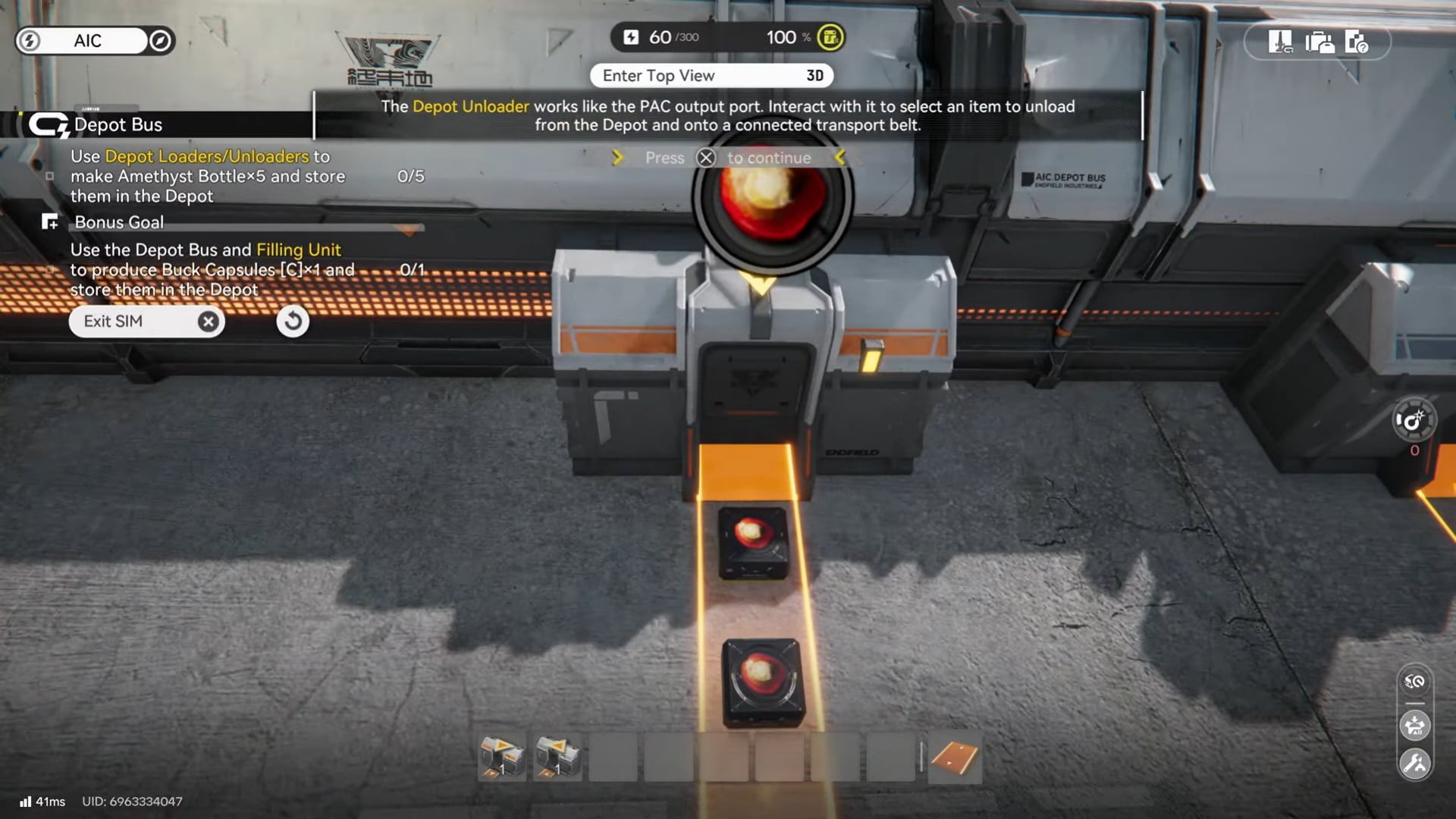
Depot Unloaders do the opposite. They are placed on the Depot Bus and connected to a belt leading into a machine’s input port. When active, they pull the specified item from storage and place it onto the belt.
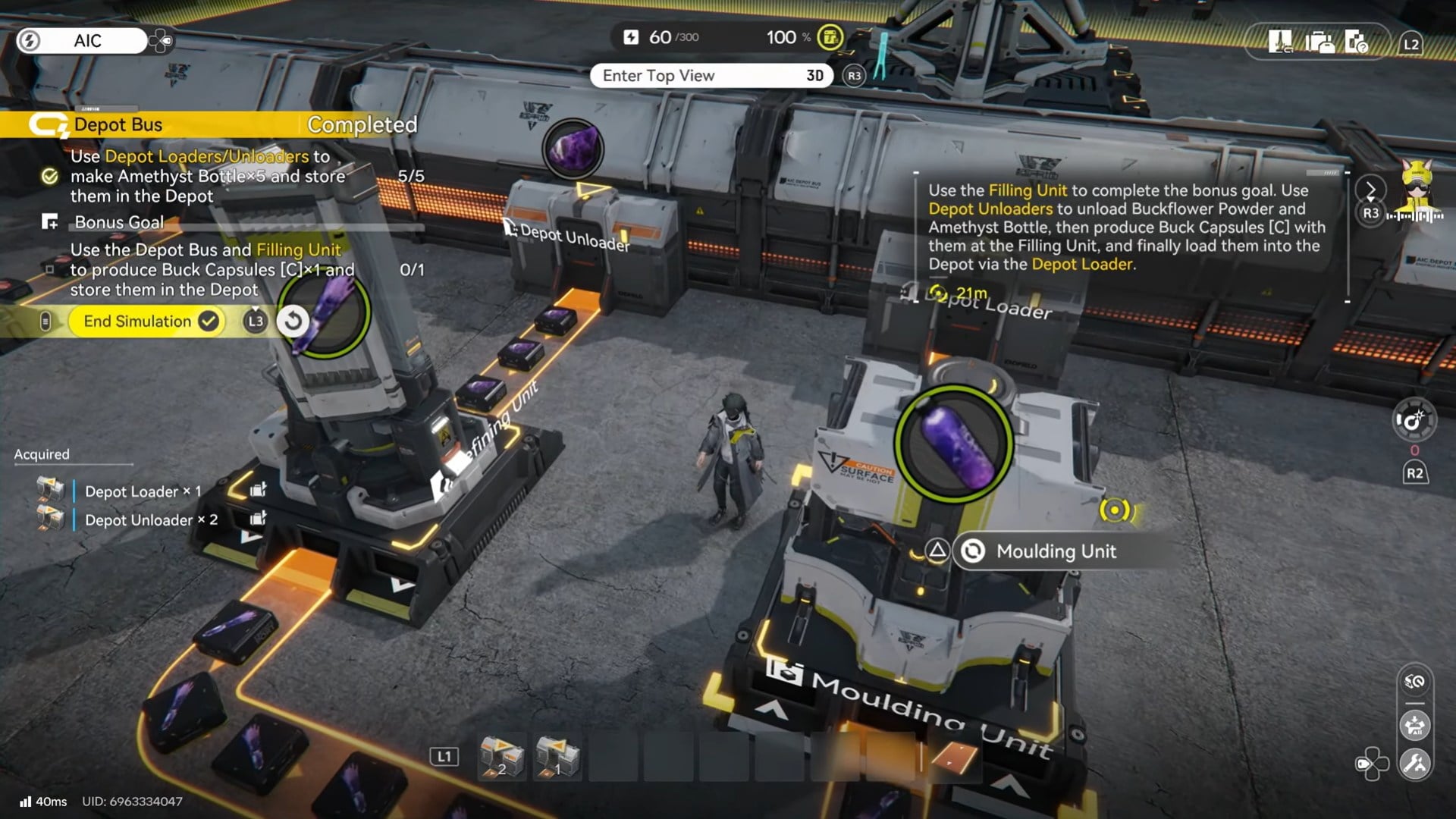
This is ideal when a downstream machine needs Amethyst Bottles intermittently. The Unloader ensures the machine only receives bottles when it’s active, without requiring a dedicated production line just for that one consumer.
End-to-end Amethyst Bottle automation flow
Step 1: Refine Amethyst Ore into Amethyst Fiber
A Refining Unit processes raw Amethyst Ore into Amethyst Fiber, which moves along a standard transport belt.
Step 2: Mould Amethyst Bottles
The Fiber is fed into a Moulding Unit, producing Amethyst Bottles as output.
Step 3: Load bottles into the Depot
A Depot Loader connected to the Moulding Unit’s output belt transfers the bottles directly into Depot storage.
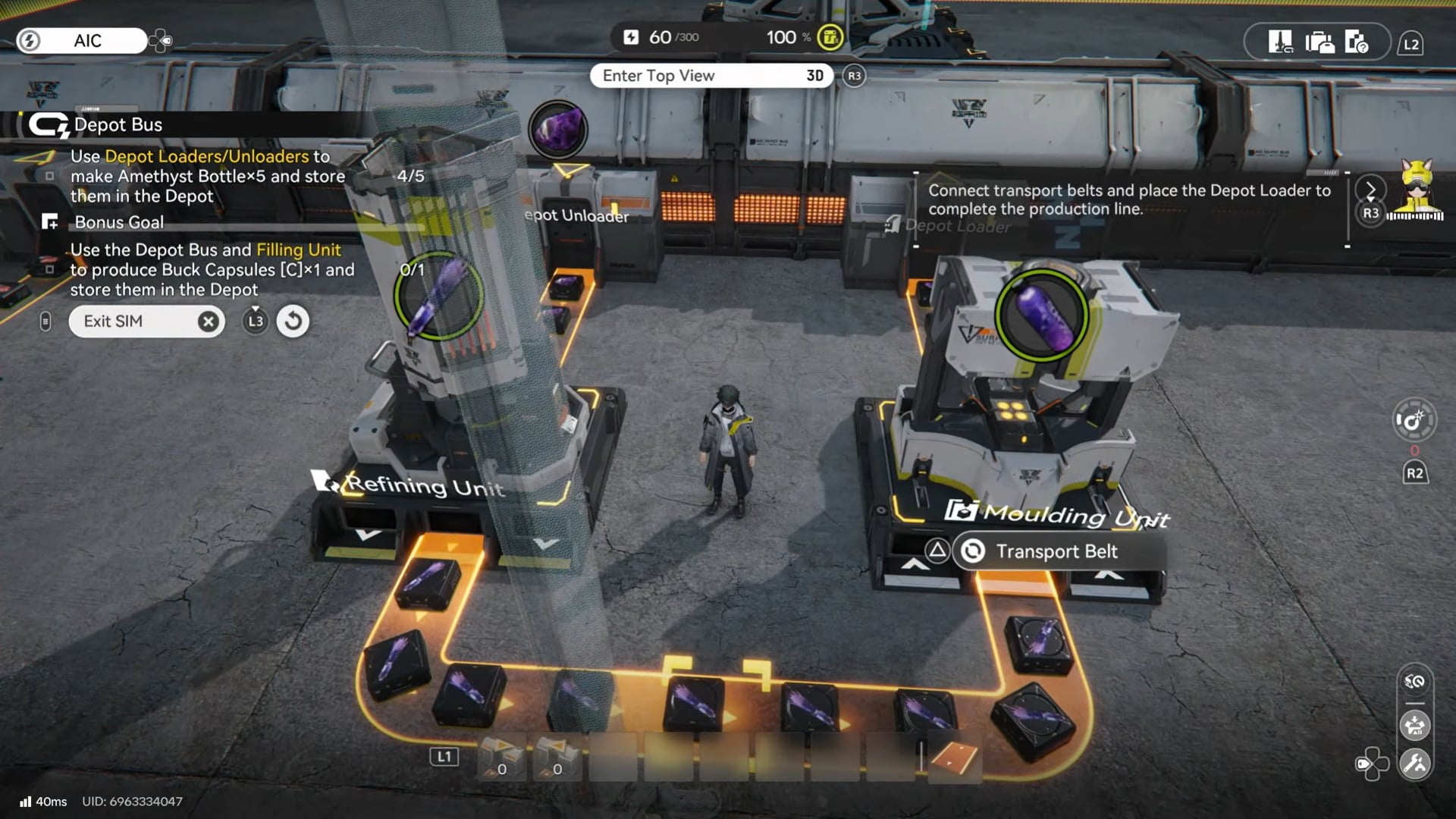
Step 4: Unload bottles where needed
Depot Unloaders placed elsewhere on the bus pull Amethyst Bottles from storage and route them to Fitting Units, assembly lines, or other recipe machines.
This loop allows one bottle production line to support many consumers without complex belt routing.
Layout considerations and efficiency tips
The Depot Bus shines when layouts are planned with intent. Keep bus lines close to high-output machines to minimize belt length. Avoid placing too many Unloaders pulling the same item unless you’re confident storage inflow can keep up.
If machines stall waiting for Amethyst Bottles, either add another Moulding Unit upstream or reduce how many Unloaders are drawing from the Depot simultaneously.
Common mistakes to avoid while using Depot Bus
One frequent mistake is assuming the Depot Bus replaces belts entirely. It doesn’t. Belts are still required between machines and Loaders or Unloaders. Another issue is forgetting power coverage; Loaders and Unloaders won’t function without proper electricity.
Overloading the bus with too many item types early on can also make debugging difficult. Start with one material, such as Amethyst Bottles, then expand.
Amethyst bottles farming explained
As production chains become more interconnected, managing intermediate materials manually becomes unsustainable. The Depot Bus introduces abstraction, letting you treat storage as part of the factory rather than the end of it.
For items like Amethyst Bottles that sit in the middle of many recipes, this system is less a convenience and more a necessity.
Using Depot Loaders and Unloaders to manage Amethyst Bottles transforms your AIC from a belt maze into a modular, scalable system. Once set up, you’ll spend less time fixing jams and more time expanding production intelligently.
If you’re planning to scale into late-game crafting, mastering the Depot Bus early will save you hours of rework later.
Thanks for taking the time to go through this how to use Depot Bus guide for Arknights Endfield. If it helped you understand things better, do share your thoughts, impressions, or doubts in the comments section. We keep a close watch and try to respond promptly to ensure you always get the support you need.