- What to know
- Arknights Endfield Seed-Picking Unit details
- What the Seed-Picking Unit is
- Why the Seed-Picking Unit matters
- Unlocking the Seed-Picking Unit
- Size, power, and placement considerations
- Seed picking unit inputs and outputs explained
- How the Seed-Picking Unit works step by step
- How seeds fit into real production chains
- Recommended ratios and layouts
- Automation and stock management tips
- Field harvesting vs factory production
- Power and efficiency considerations
- Common problems and how to fix them
- Advanced optimization strategies
- Example production chain for Seed picking
- Why the Seed-Picking Unit is essential
What to know
- The Seed-Picking Unit extracts seeds from harvested plants inside the AIC
- It sits between field gathering and Planting Units in the production chain
- Reliable seed throughput is mandatory for consumables and plant-based crafting
- Proper ratios, logistics, and buffering prevent factory stalls
The Seed-Picking Unit is one of those buildings you can technically ignore early on — and then regret deeply once your factory scales. While it doesn’t look flashy, it quietly determines whether your Planting Units run forever or constantly stall due to seed shortages.
This guide covers everything about the Seed-Picking Unit: what it does, how it works, how to unlock and place it, how it feeds into real recipes, optimal layouts, automation logic, and how to fix common problems. If your goal is a self-sustaining AIC rather than endless field farming, this unit is non-negotiable.
Arknights Endfield Seed-Picking Unit details
| Category | Details |
|---|---|
| System | Automated Industry Complex (AIC) |
| Building type | Assembly / Processing |
| Tier | Basic II (early–mid game) |
| Primary role | Convert plants into seeds |
| Input | Harvested plants / flora |
| Output | Corresponding seed items |
| Power use | Low–moderate |
| Core partners | Planting Unit, Depot |
What the Seed-Picking Unit is
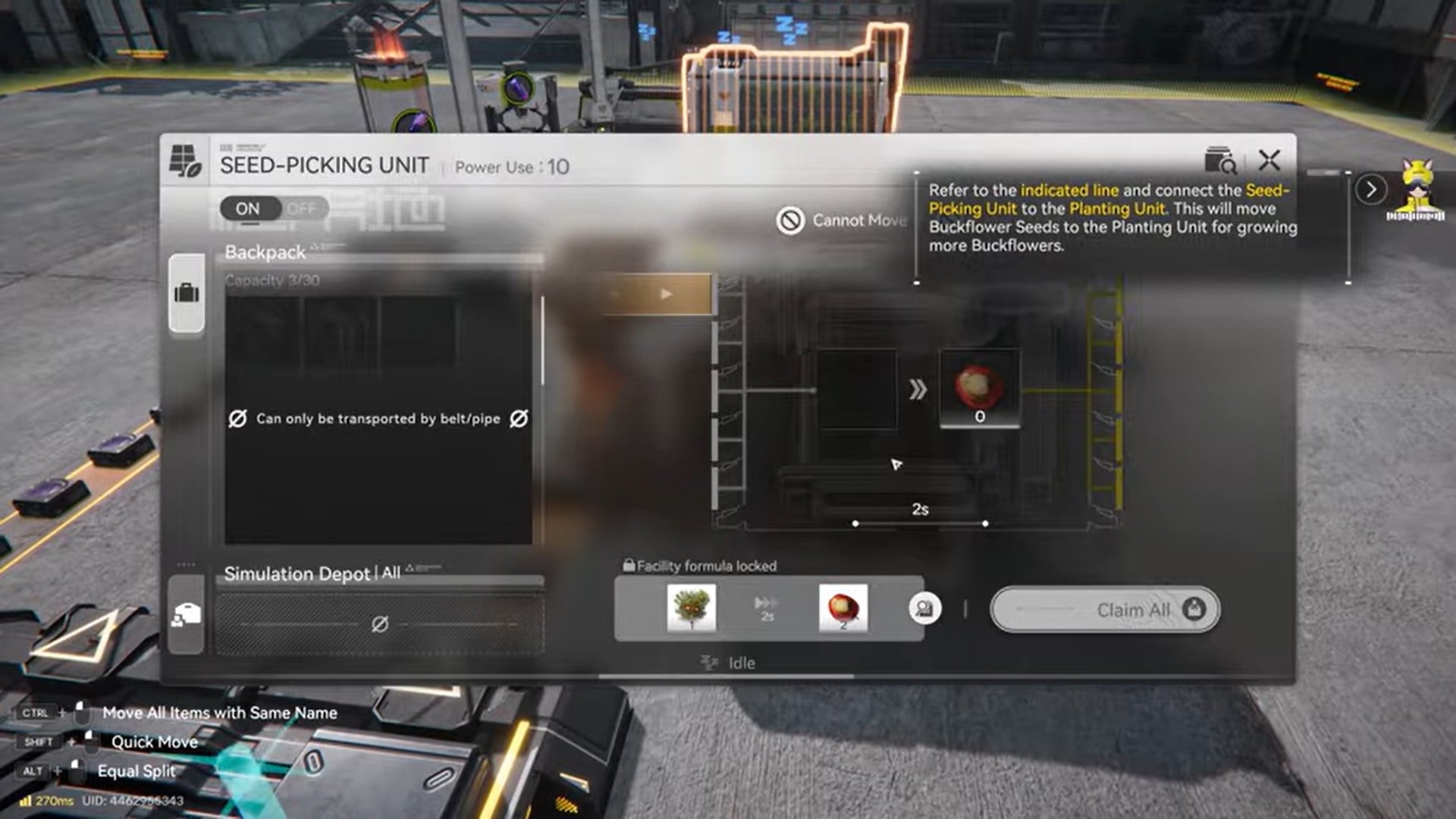
The Seed-Picking Unit is an AIC assembly facility designed to extract seeds from plant items. Instead of seeds being a rare byproduct of exploration, this unit turns plants into a repeatable industrial resource.
Functionally, it acts as the missing link between:
- Field collection of plants
- Automated planting inside your base
Without it, Planting Units eventually stop, because seeds are not generated fast enough through exploration alone.
In simple terms:
Plants go in → Seeds come out → Seeds go back into planting.
Why the Seed-Picking Unit matters
Seeds are deceptively important in Arknights: Endfield. They are not just for farming — they are a recurring input in multiple production chains.
If seeds run out:
- Planting Units idle
- Consumable crafting stalls
- Shredding, Mixing, and Packaging chains choke
The Seed-Picking Unit solves this by making seed production scalable and predictable, which is the foundation of late-game automation.
Unlocking the Seed-Picking Unit
AIC research requirements
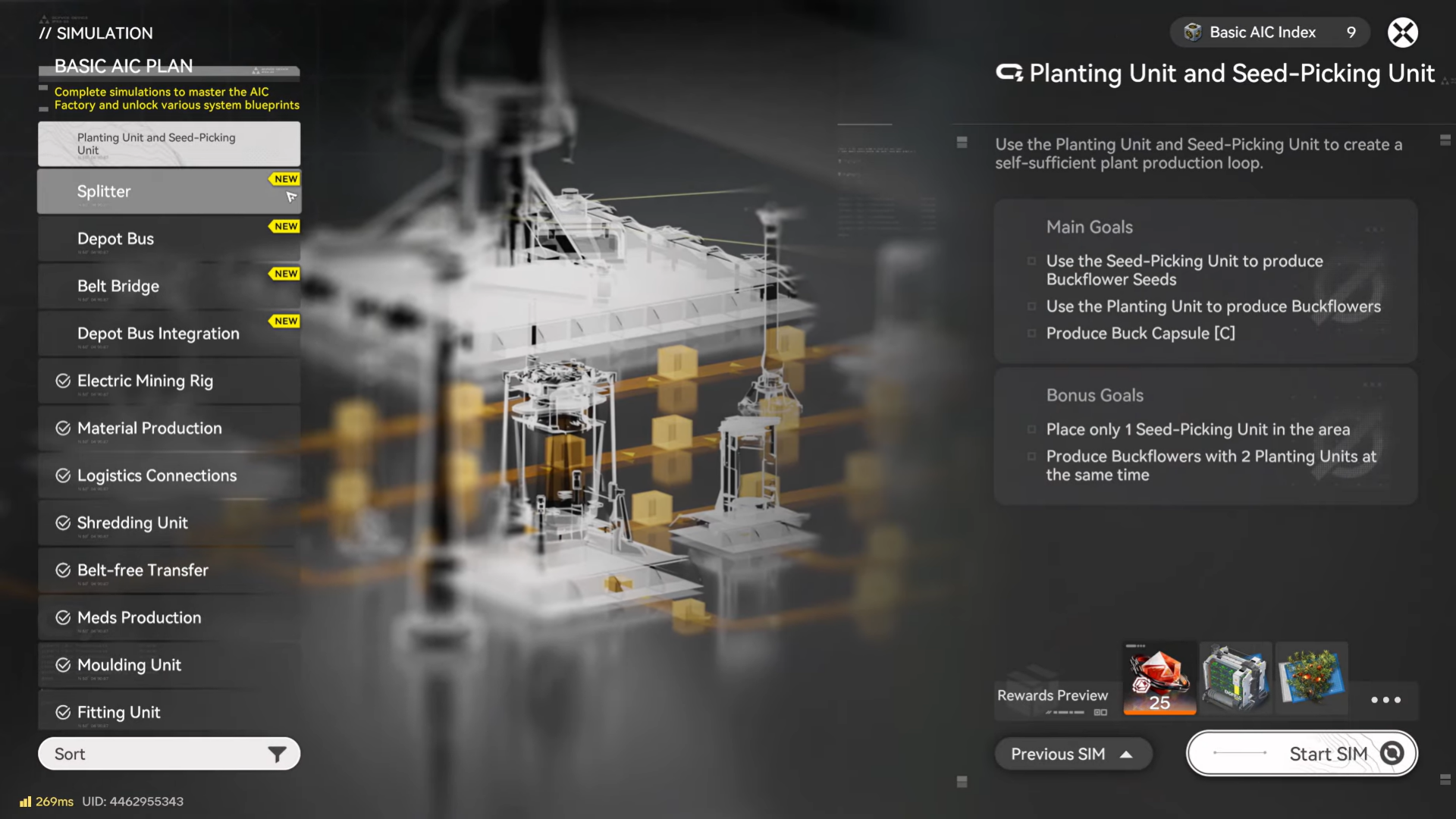
The Seed-Picking Unit is unlocked through the AIC Plan research tree, under the Planting / Assembly branch.
To access it, you typically need:
- Progress into Basic II AIC research
- Planting-related nodes unlocked
- Sufficient AIC Plan points
If it’s not appearing yet, continue exploring and completing AIC objectives to unlock more research tiers.
Story progression gating
Some factory options are tied to story or protocol progression. If the research node exists but construction is locked, advance the main story until additional AIC functionality becomes available.
Size, power, and placement considerations
Community data consistently shows the Seed-Picking Unit as:
- Medium footprint (commonly around 5×5)
- Low power draw compared to Packaging or Refining
This makes it easy to slot into early factory clusters, but poor placement can still cause bottlenecks if conveyors or depots are too far away.
Best practice is to place it adjacent to Planting Units or depots, not isolated at the edge of your AIC.
Seed picking unit inputs and outputs explained
Inputs: plants
The Seed-Picking Unit consumes plant items, such as:
- Medicinal flora
- Food-related crops
- Regional plant resources
Exact names vary by region and progression, but the rule is consistent: one plant type produces its matching seed.
Outputs: seeds
Each plant produces a specific seed:
- Plant A → Seed A
- Plant B → Seed B
There is no randomness. Output is deterministic, which makes planning reliable.
Seeds are then used for:
- Replanting in Planting Units
- Certain crafting and consumable recipes
How the Seed-Picking Unit works step by step
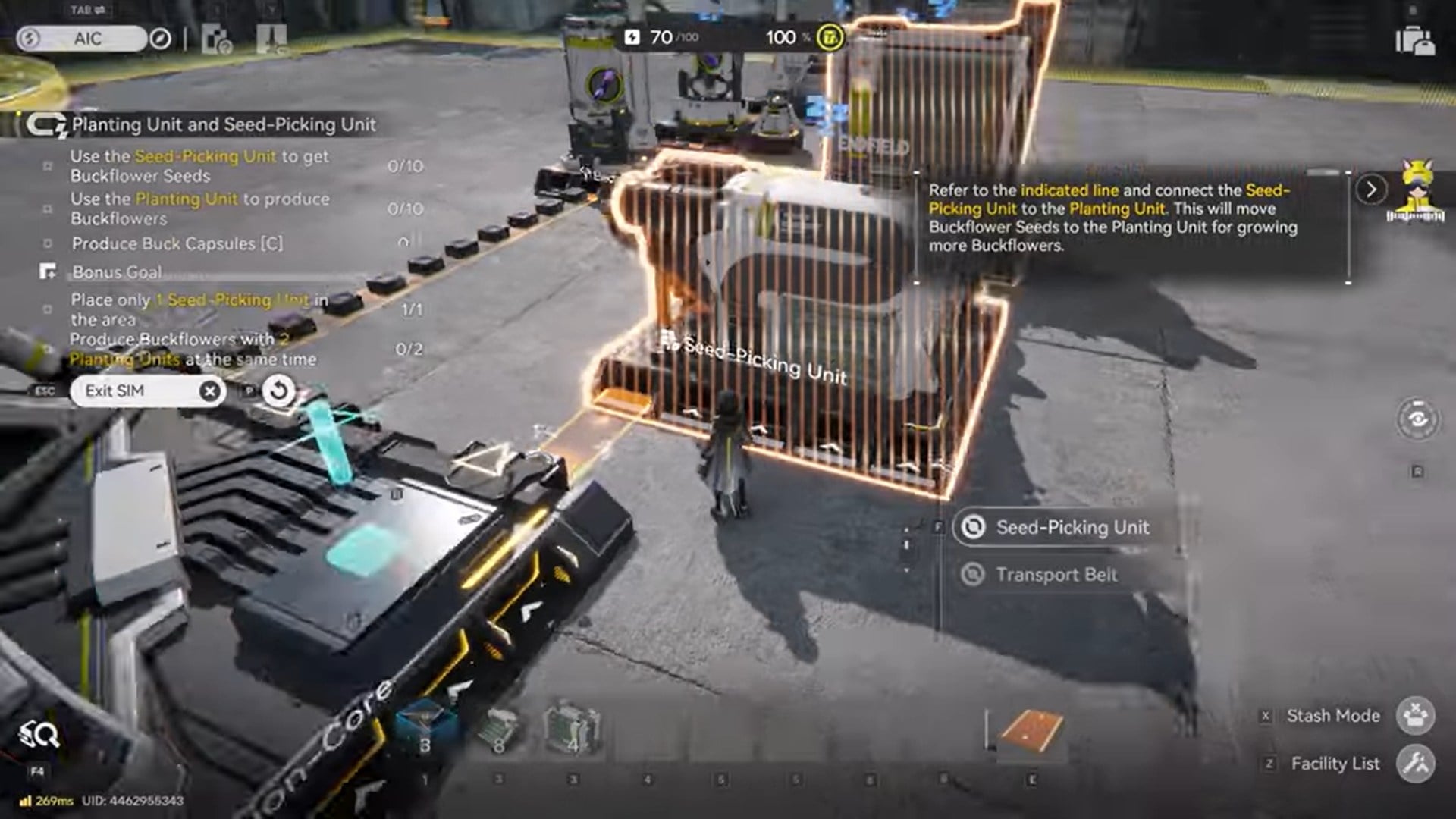
Step 1: Supply plants
Plants arrive from:
- Field harvesting
- Planting Unit harvest output
- Depot storage
If the wrong plant type is supplied, the unit will not process it.
Step 2: Assembly processing
The Seed-Picking Unit runs a timed extraction process:
- Plants are consumed
- Seeds are produced at a fixed rate
The process pauses automatically if inputs stop or outputs are blocked.
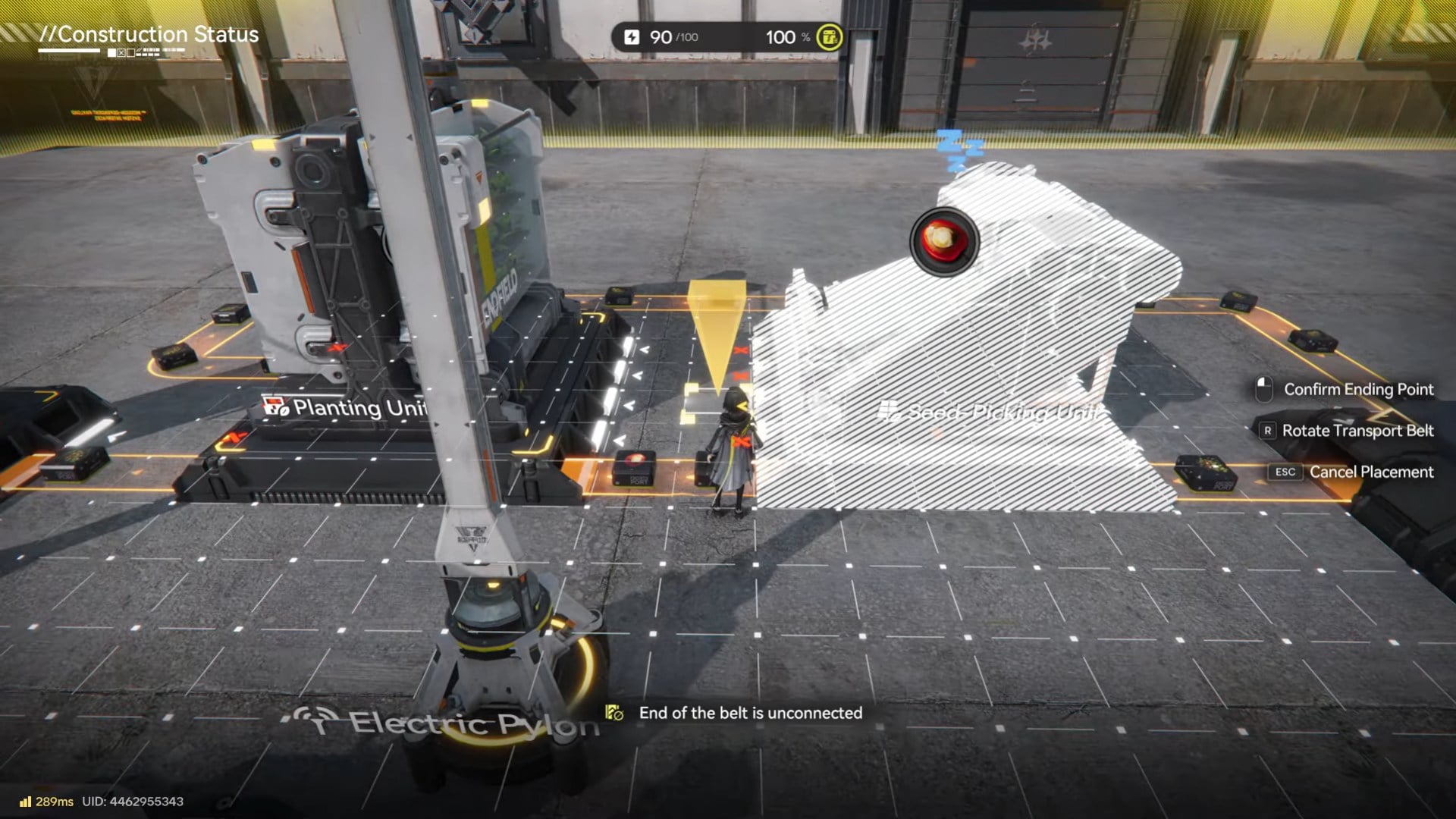
Step 3: Output routing
Seeds are sent to:
- Connected depots
- Conveyors feeding Planting Units
- Buffers for stockpiling
If output has nowhere to go, production halts.
How seeds fit into real production chains
Seeds are rarely the final goal. They enable longer industrial loops.
Core loop: sustainable farming
Seed → Planting Unit → Harvested plant → Seed-Picking Unit → Seed
This loop alone removes the need for manual farming.
Extended loop: consumables
Seed → Plant → Harvest → Shredding → Mixing → Packaging → Consumable
This chain supports:
- Healing items
- Buff consumables
- Crafting reagents
As your base scales, these chains consume plants constantly — which means seed generation must keep up.
Recommended ratios and layouts
Starter ratio: 2 Planting : 1 Seed-Picking
A commonly used and stable ratio is:
- 2 Planting Units
- 1 Seed-Picking Unit
This setup:
- Feeds enough plants into the picker
- Still leaves surplus plants for other processing
It’s compact, power-efficient, and ideal for early automation.

Compact starter layout
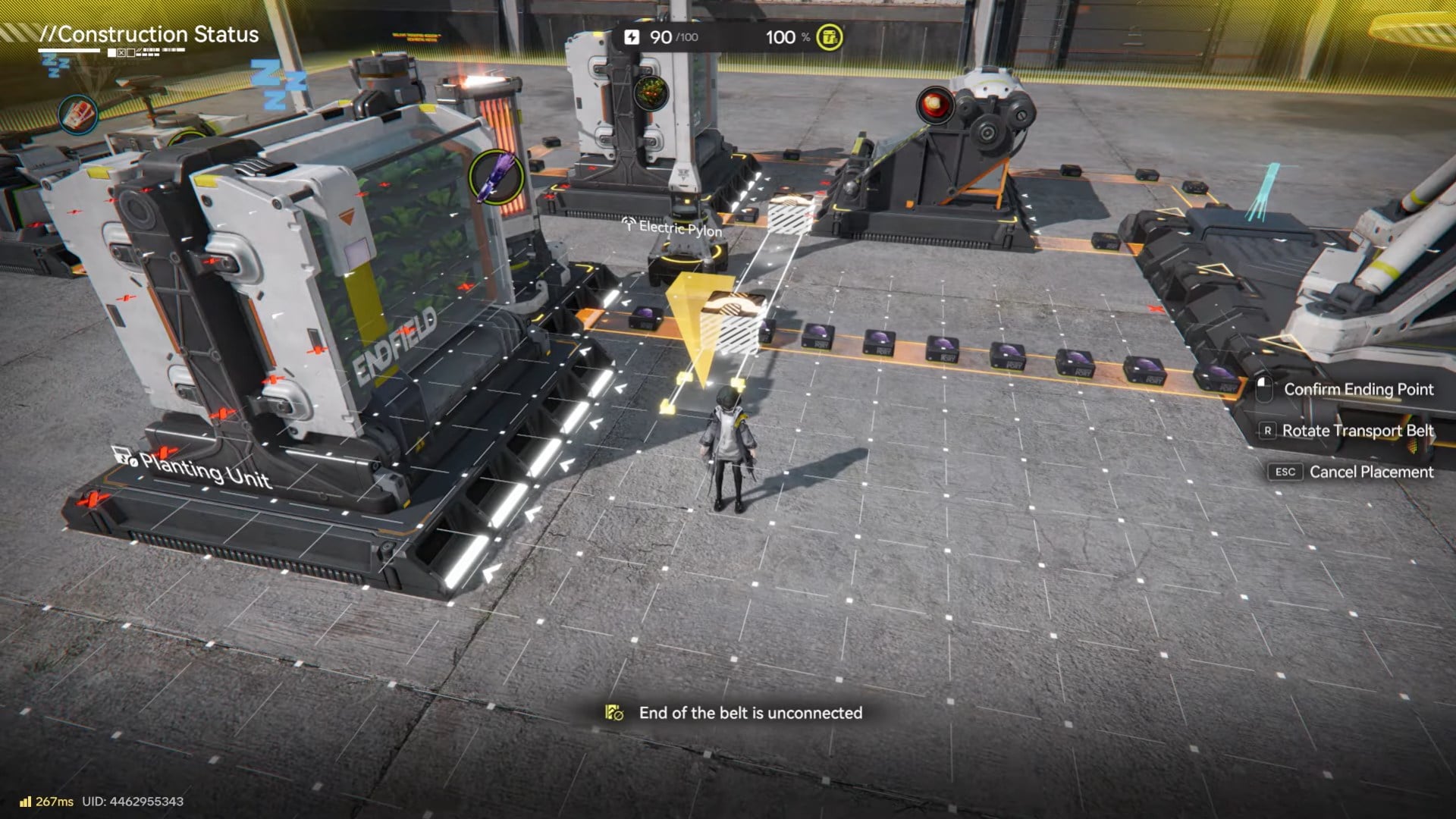
- Two Planting Units side by side
- One Seed-Picking Unit adjacent
- Short conveyor line to a depot
This creates a clean, self-contained farming module.
Midgame scalable layout
- Four Planting Units
- Two Seed-Picking Units
- Shared depot and split conveyors
This prevents single-unit bottlenecks once consumable demand rises.
Automation and stock management tips
Use buffers
Always place a depot or buffer between:
- Planting output
- Seed-Picking input
This absorbs spikes in demand and prevents oscillation where units start and stop repeatedly.
Maintain seed thresholds
If your AIC supports stock rules:
- Set minimum seed counts
- Pause extraction once targets are reached
This avoids overproducing seeds at the expense of plant-based recipes.
Separate loops by plant type
Avoid mixing multiple plant species through one picker unless required. Dedicated lines are easier to debug and scale.
Field harvesting vs factory production
Early game, you’ll rely on field-collected plants to feed the Seed-Picking Unit. That’s normal.
Mid to late game, the goal shifts to:
- Planting Units producing plants
- Seed-Picking Units maintaining seed supply
- Field harvesting becoming optional
Once this loop is stable, your factory becomes resilient and low-maintenance.
Power and efficiency considerations
Seed-Picking Units are relatively cheap to run. Take advantage of this by:
- Running multiple pickers instead of one overloaded unit
- Saving power budget for heavy machines like Packaging and Refining
Power rarely limits seed production — logistics usually do.
Common problems and how to fix them
Seed-Picking Unit idle with power on
Causes:
- No valid plant input
- Wrong plant type supplied
Fix:
- Check plant type compatibility
- Verify conveyor routing
Output backing up
Causes:
- Depot full
- Downstream machines paused
Fix:
- Add storage
- Increase conveyor throughput
- Resume downstream production
Plant shortages downstream
Causes:
- Too many plants diverted to seed picking
Fix:
- Reduce picker count
- Increase planting capacity
- Add buffers to prioritize processing chains
Advanced optimization strategies
Parallel pickers
If one picker can’t keep up, don’t overfeed it. Add a second unit instead. Parallelization is safer than vertical scaling.
Physical proximity
Place Seed-Picking Units upstream of Shredding and Mixing clusters. Shorter belts reduce delays and make troubleshooting easier.
Research synergies
Some AIC upgrades improve:
- Processing speed
- Multi-output efficiency
If seeds feel scarce, research upgrades often solve the issue more cleanly than brute-force building.
Example production chain for Seed picking
- Planting Unit grows a medicinal crop
- Harvested plants split via conveyor
- One line → Seed-Picking Unit → Seeds → Planting
- Second line → Shredding → Mixing → Packaging → Consumable
This keeps farming sustainable while still feeding high-value recipes.
Why the Seed-Picking Unit is essential
The Seed-Picking Unit is not optional infrastructure — it’s industrial glue. It transforms plants from a finite exploration resource into a renewable production loop, enabling large-scale consumable crafting and stable factory growth.
If you build it early, automate it cleanly, and scale it thoughtfully, you avoid one of the most common midgame AIC failures: plant starvation. Mastering this unit pays dividends across every stage of Arknights: Endfield.