- What to know
- Understanding Arknights as a universe, not just a single story
- What Arknights: Endfield actually is
- The timeline: set after Arknights, but not immediately after
- Talos-II and why the setting matters
- Endfield Industries and its link to Terra
- Originium still exists, but its role has changed
- Characters: familiar species, unfamiliar faces
- Gameplay evolution reinforces that it’s not a sequel
- How Hypergryph itself frames Endfield
- So, is Arknights: Endfield a sequel?
- Why this distinction actually benefits players
What to know
- Arknights: Endfield is set in the same universe as Arknights, not a numbered sequel
- It takes place on a different planet, long after the original game’s events
- Lore connections exist, but the story stands on its own
- Gameplay, tone, and scale are intentionally very different
Arknights fans have been asking a simple question with a surprisingly layered answer: Is Arknights: Endfield a sequel? If you’re coming from the original game, it’s natural to expect a continuation of Rhodes Island’s story. What Endfield delivers instead is something more ambitious—a parallel evolution of the universe rather than a straight follow-up.
Below is a deep, long-form breakdown that covers timeline, lore, setting, characters, gameplay philosophy, and how Endfield fits into the broader Arknights canon.
Understanding Arknights as a universe, not just a single story
Before deciding whether Endfield is a sequel, it helps to understand how Arknights itself is structured.
Arknights has never been a single linear narrative. Instead, it’s a layered world built around:
- The planet Terra
- Originium as a civilization-shaping resource and curse
- Political conflicts between nations rather than one “main villain”
- Fragmented storytelling through events, side stories, and operator files
Even within Arknights, major arcs often happen in parallel. That design choice makes it easier for the universe to expand outward rather than forward.
Endfield follows that same philosophy—but on a much larger scale.
What Arknights: Endfield actually is

Arknights: Endfield is a new game developed by Hypergryph, the same studio behind Arknights. However, it’s not built as “Arknights 2.”
Instead, Endfield is:
- A 3D action RPG with real-time combat
- A base-building and logistics-focused experience
- A story set on a different planet entirely
You don’t play as the Doctor from Rhodes Island. You don’t command operators in tower defense lanes. The perspective is broader, slower, and more industrial.
That alone signals that Endfield is not a traditional sequel.
The timeline: set after Arknights, but not immediately after
One of the strongest arguments for Endfield being sequel-like is its placement in the timeline.
Endfield takes place long after the era of Arknights, in a future where humanity—or its descendants—have expanded beyond Terra.
Key points about the timeline:
- The original Arknights story is confined to Terra
- Endfield takes place on Talos-II, a separate planet
- Interstellar travel has already occurred
- Institutions descended from Terra-based powers still exist
This places Endfield chronologically after Arknights—but chronological order alone does not make something a sequel.
Talos-II and why the setting matters
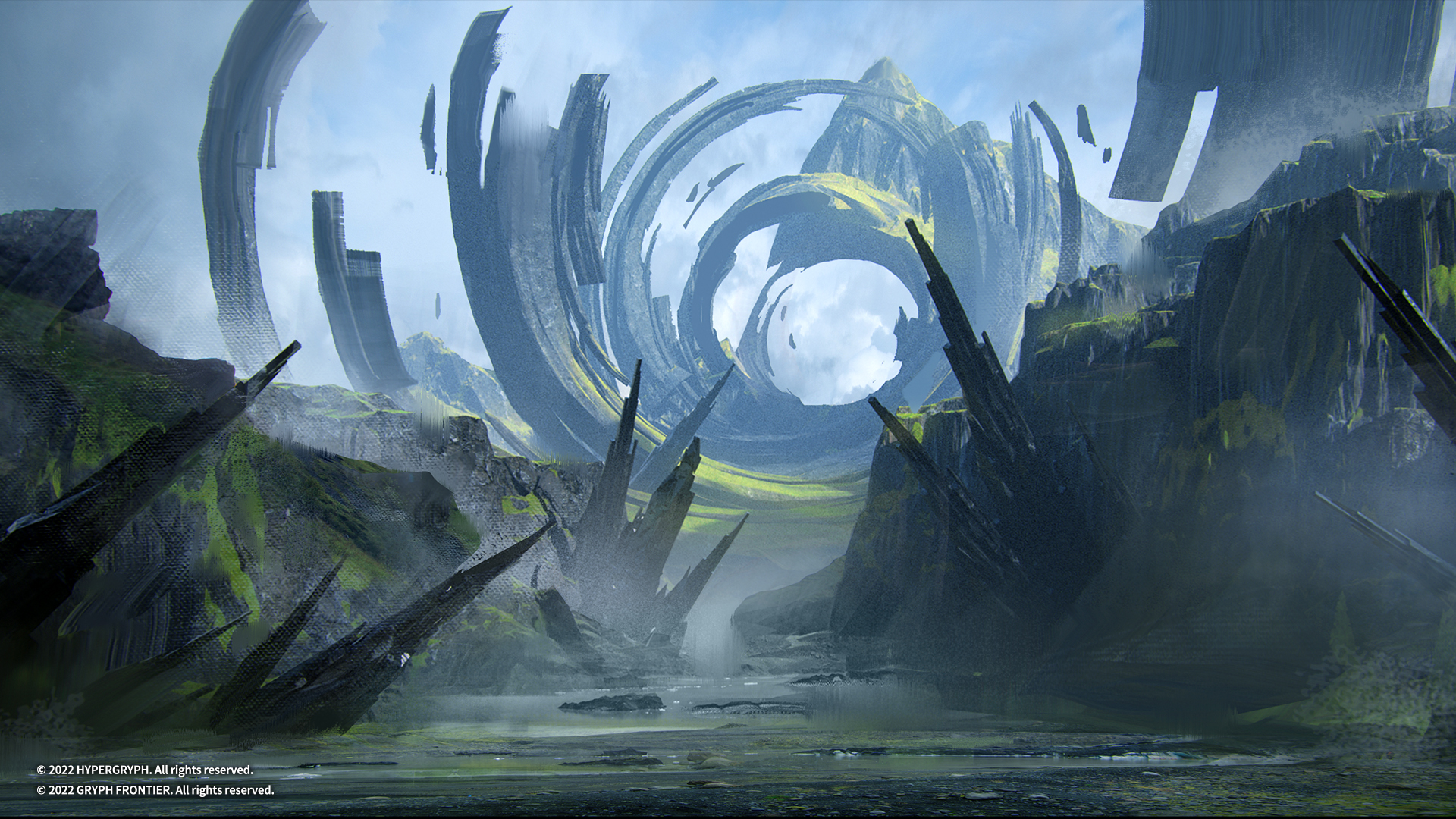
Endfield’s story unfolds on Talos-II, a harsh, resource-rich planet undergoing large-scale development.
Talos-II is defined by:
- Extreme environments
- Dangerous native lifeforms
- Massive industrial expansion projects
- Constant logistical challenges
Unlike Terra, which is shaped by politics and ideology, Talos-II is shaped by infrastructure. Survival depends on supply chains, automation, and long-term planning.
That thematic shift is a major reason Endfield feels separate rather than sequential.
Endfield Industries and its link to Terra
One of the clearest lore bridges between the two games is Endfield Industries.
Endfield Industries:
- Is implied to originate from Terra
- Operates with advanced technology far beyond early Arknights-era nations
- Acts as a semi-autonomous industrial authority rather than a medical group
Where Rhodes Island sought to treat Oripathy and navigate political chaos, Endfield Industries focuses on:
- Colonization
- Resource extraction
- Planetary-scale construction
This ideological shift reflects how civilization itself has changed since Arknights.
Originium still exists, but its role has changed
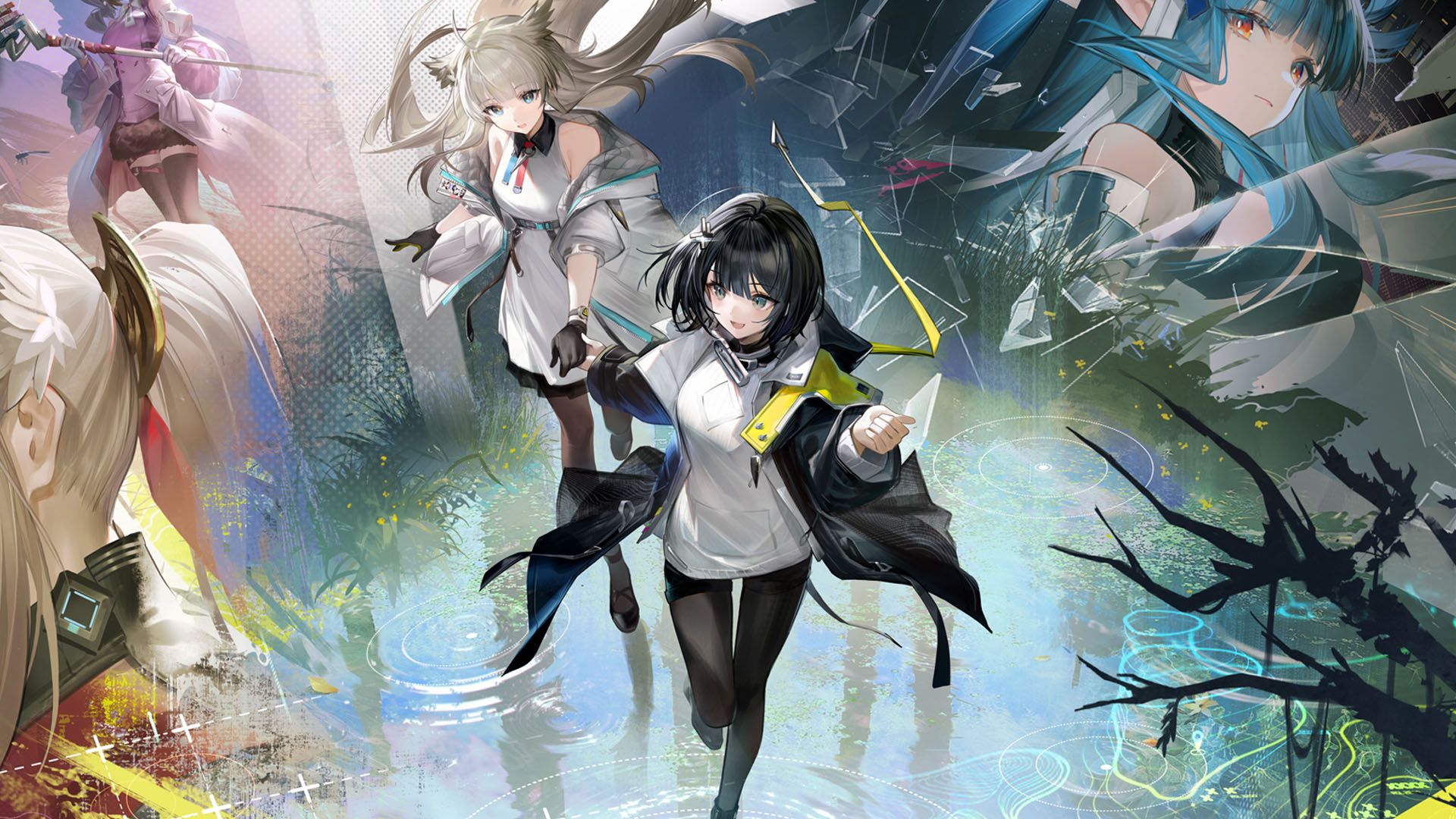
Originium is central to Arknights—economically, medically, and socially. In Endfield, it hasn’t disappeared, but it no longer defines everyday life in the same way.
What’s different:
- Originium-related crises are no longer the main driver of conflict
- Technology has adapted to mitigate some of its dangers
- The narrative focus has shifted from survival to expansion
That evolution makes sense in a post-Arknights era, but it also reinforces that Endfield is exploring consequences, not continuing unresolved threads.
Characters: familiar species, unfamiliar faces
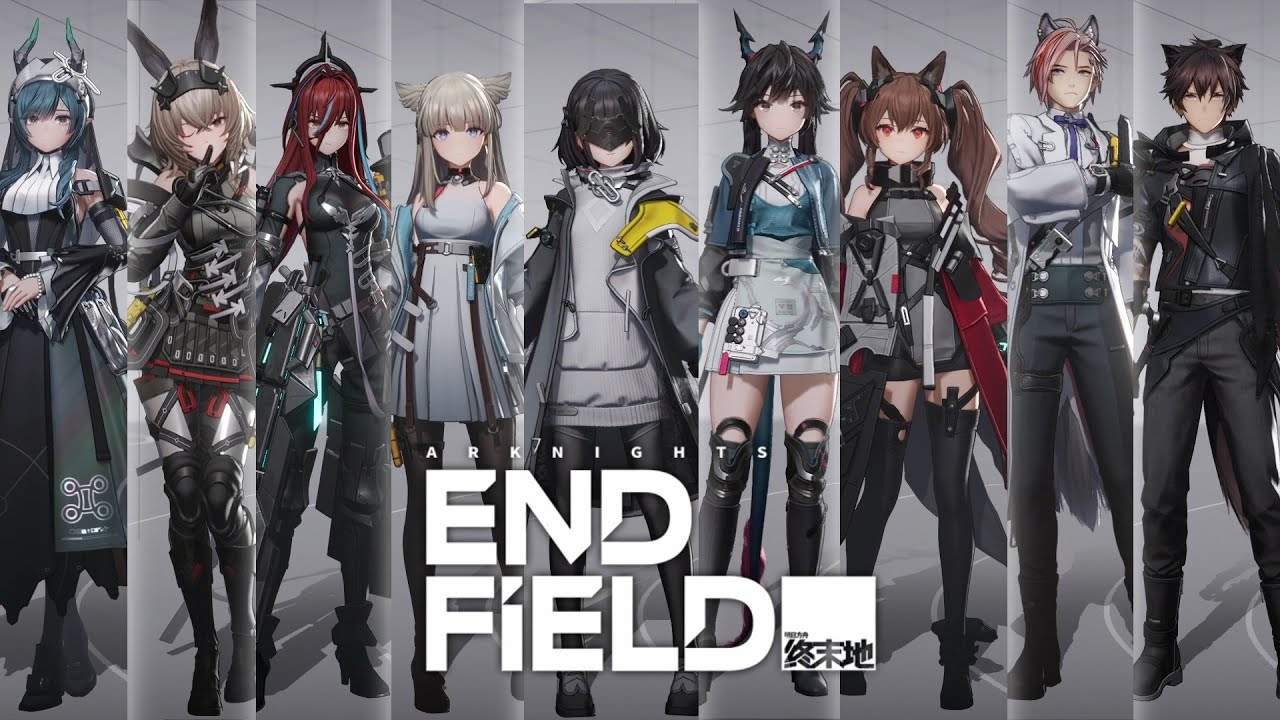

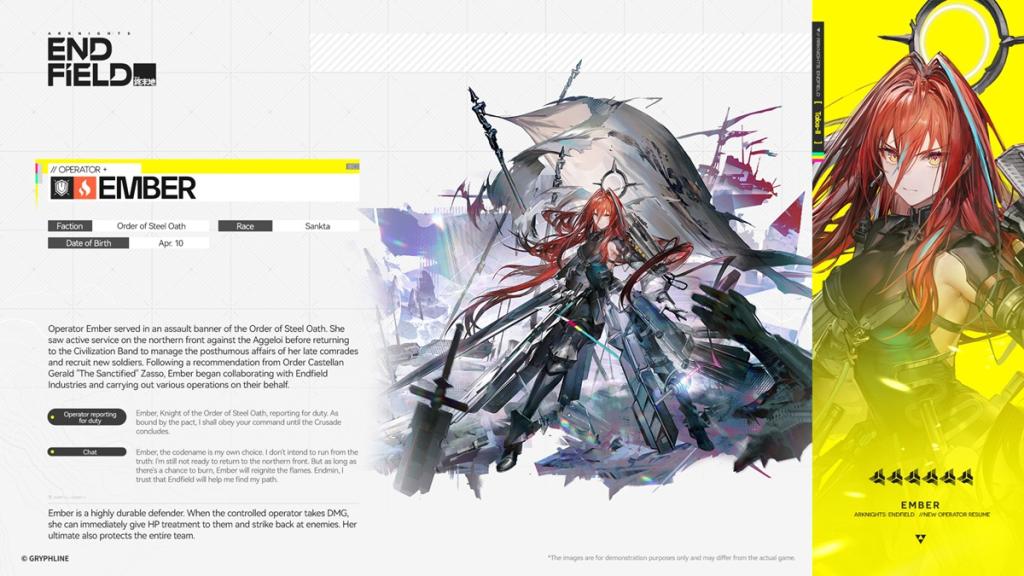
Endfield introduces an almost entirely new cast. While you’ll recognize races and design motifs from Arknights, you won’t see returning operators stepping into starring roles.
Important distinctions:
- No direct continuation of Rhodes Island characters
- New leadership, new motivations, new conflicts
- Character stories are grounded in Talos-II’s challenges
This narrative independence is a deliberate choice. Endfield is designed so you can play it without any prior Arknights knowledge.
A true sequel would not do that.
Gameplay evolution reinforces that it’s not a sequel
Gameplay is often the clearest indicator of intent.
Arknights:
- 2D tower defense
- Stage-based structure
- Tactical micro-decisions
Endfield:
- 3D action combat
- Persistent world zones
- Base-building, automation, and logistics
The design goals are completely different. Endfield isn’t trying to “improve” Arknights’ gameplay—it’s trying to explore a different genre within the same universe.
That puts it closer to a spin-off or successor title than a sequel.
How Hypergryph itself frames Endfield
While Hypergryph avoids rigid labels, their messaging consistently positions Endfield as:
- A new entry in the Arknights universe
- A standalone experience
- A long-term expansion of the franchise
They emphasize world-building continuity rather than story continuation. That distinction matters.
If Arknights is one chapter in a history book, Endfield is a later volume—connected, but not dependent.
So, is Arknights: Endfield a sequel?
The most accurate answer is:
Arknights: Endfield is not a direct sequel, but it is a canonical successor set later in the same universe.
It shares:
- Lore foundations
- Thematic DNA
- World-building continuity
It does not share:
- Main characters
- Core gameplay
- Ongoing story arcs
That places it somewhere between a sequel, a spin-off, and a soft reboot—closer to a “universe expansion” than anything else.
Why this distinction actually benefits players
For longtime fans, Endfield offers:
- A glimpse into the far future of the Arknights world
- Answers to “what happens next” on a civilizational scale
- Familiar ideas explored in unfamiliar ways
For new players, it offers:
- A clean entry point
- No narrative homework
- A modern gameplay style without legacy constraints
That balance would be impossible if Endfield were a strict sequel.
Arknights: Endfield doesn’t continue the story—you could say it continues the world. It shows what happens after survival gives way to expansion, and after crisis gives way to construction.
If you’re looking for Arknights 2, Endfield isn’t it.
If you’re curious about how far the Arknights universe can stretch, Endfield is exactly that experiment.