- What to know
- Clay crafting in Hytale
- Where Clay comes from in Hytale
- Where to find Red Sandstone in Hytale
- How to make clay from red sandstone
- How to dye clay into different colors
- Understanding Clay types and variants
- Using Clay for construction
- Clay Uses
- Locations involved in Clay production
- Practical tips for working with Clay
- Why Clay matters in long-term play
What to know
- Clay can be crafted reliably from red sandstone found in specific biomes
- Red sandstone must be processed before it becomes usable clay
- Clay has multiple types, including colored, smooth, and brick variants
- Most clay crafting starts at the Furniture Workbench
Clay plays a much bigger role in Hytale than it might first appear. While it looks like a simple decorative block, clay actually sits at the center of many building, roofing, and structural recipes. Understanding how clay is made, where its raw materials come from, and how different clay types work will make building smoother and far more flexible as you progress.
This guide breaks everything down clearly, from finding red sandstone to crafting colored and structural clay blocks.
Clay crafting in Hytale
| Aspect | Details |
|---|---|
| Primary source | Red sandstone |
| Main crafting station | Furniture Workbench |
| Processing required | Furnace (for cobble) |
| Clay variants | Base, colored, smooth, bricks |
| Main use | Building and decoration |
Where Clay comes from in Hytale
Clay exists in two forms: naturally generated clay blocks and crafted clay.
Natural clay occasionally spawns near riverbanks, shallow water edges, or underground layers in early zones. These deposits are useful when you stumble across them, especially early on, but they are inconsistent and can’t be relied on for large projects.
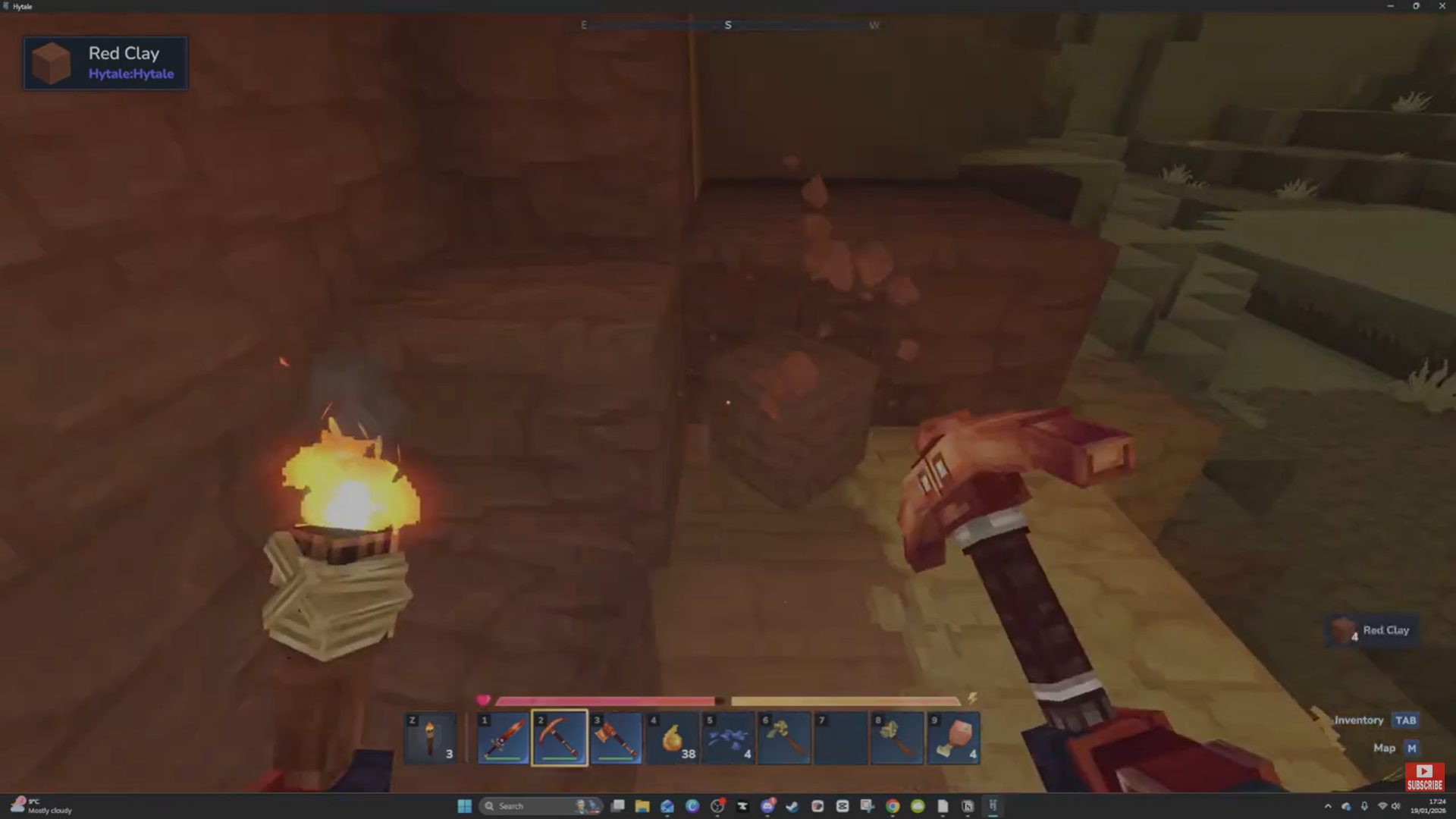
Crafted clay is the dependable method. It allows you to produce clay in bulk as long as you have access to red sandstone, fuel, and basic crafting stations. For most players, crafting quickly becomes the primary source.
Where to find Red Sandstone in Hytale
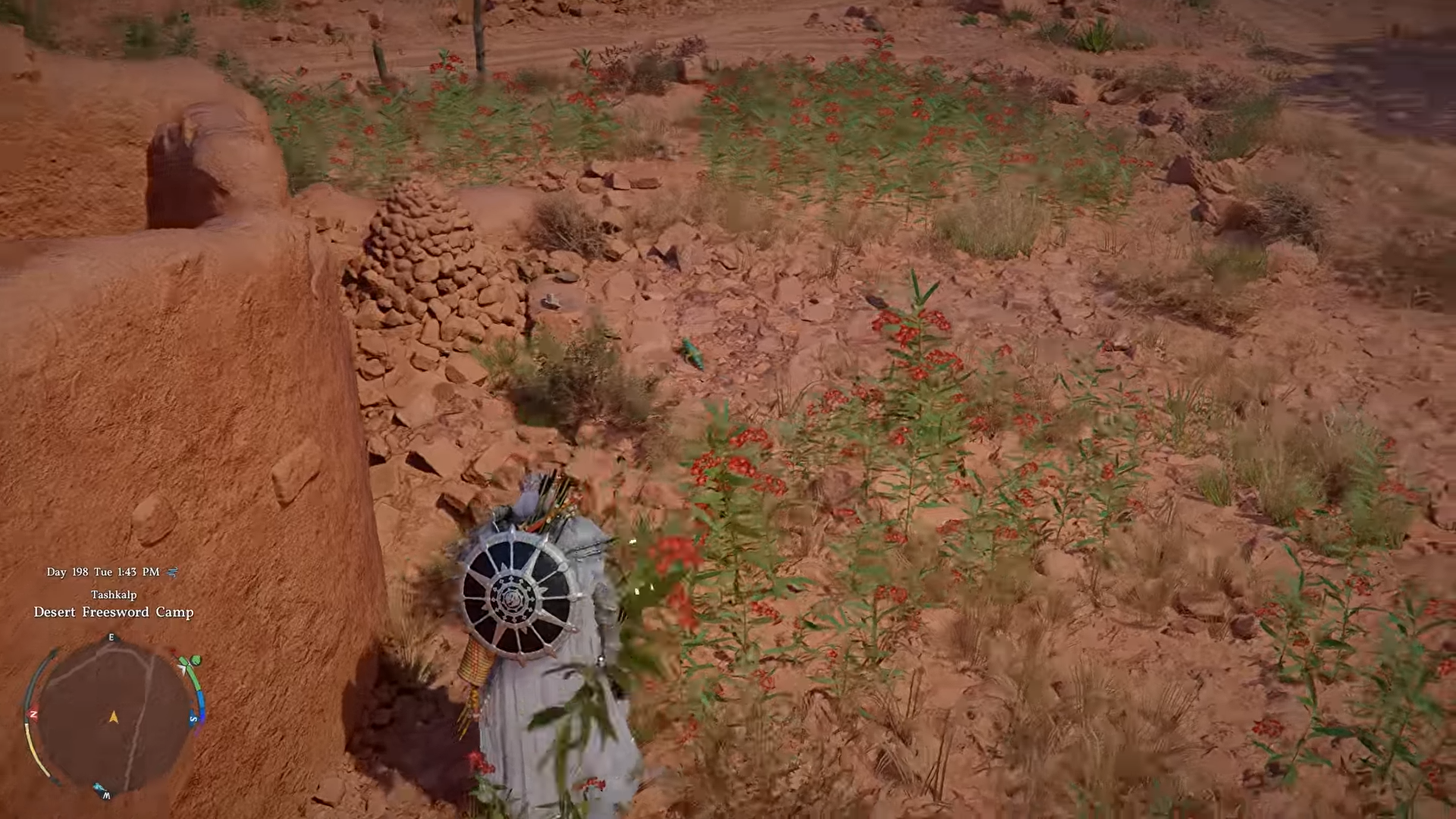
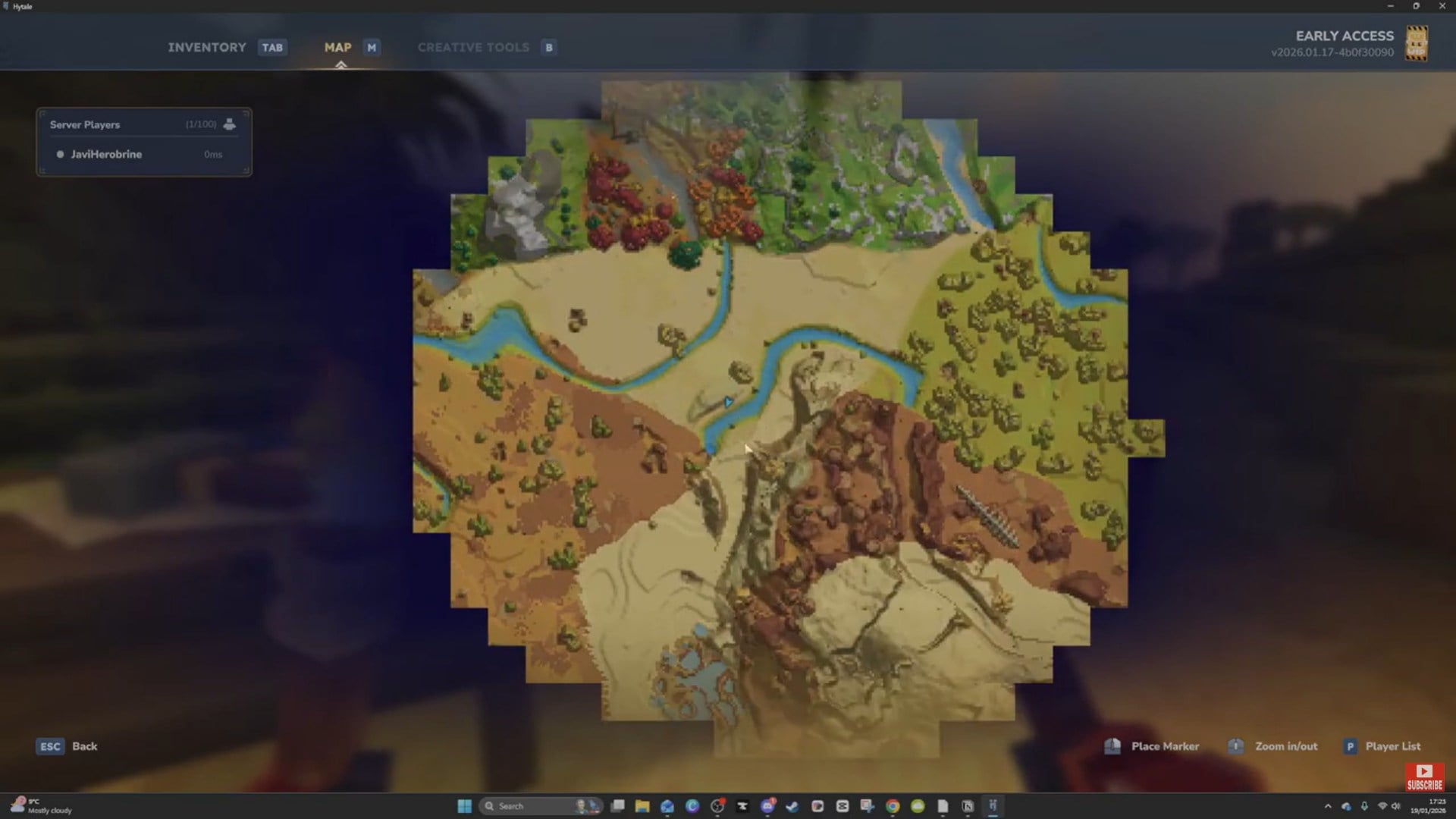
Red Sandstone is the backbone of clay crafting. You’ll most commonly find it in:
- Savannah biomes
- Badlands-style terrain
- Red sand regions with layered stone formations
Red sandstone appears either as full blocks or as Red Sandstone Cobble, which is what you usually get when mining. Cobble cannot be used directly for clay and must be processed first.
How to make clay from red sandstone
Step 1: Mine Red Sandstone Cobble
Travel to a savannah or badlands biome and mine red sandstone. Most of the time, this will drop Red Sandstone Cobble rather than finished blocks.
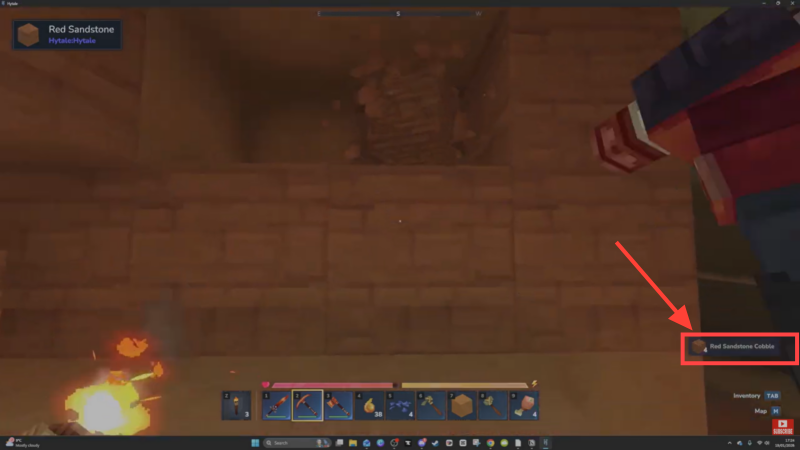
Try to collect large amounts at once if you’re planning to build, since clay recipes consume sandstone quickly.
Step 2: Smelt Cobble into Red Sandstone
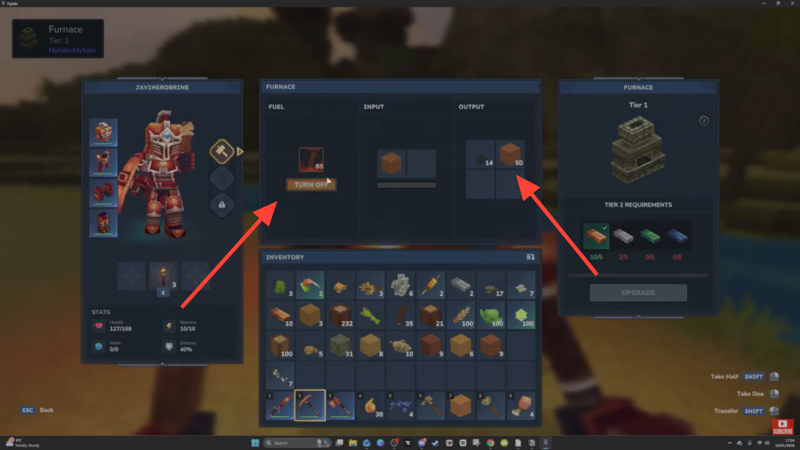
Place red sandstone cobble into a Furnace with any fuel source.
The standard conversion works like this:
2 Red Sandstone Cobble → 1 Red Sandstone block
This step is essential. Without smelting, the cobble cannot be turned into clay.
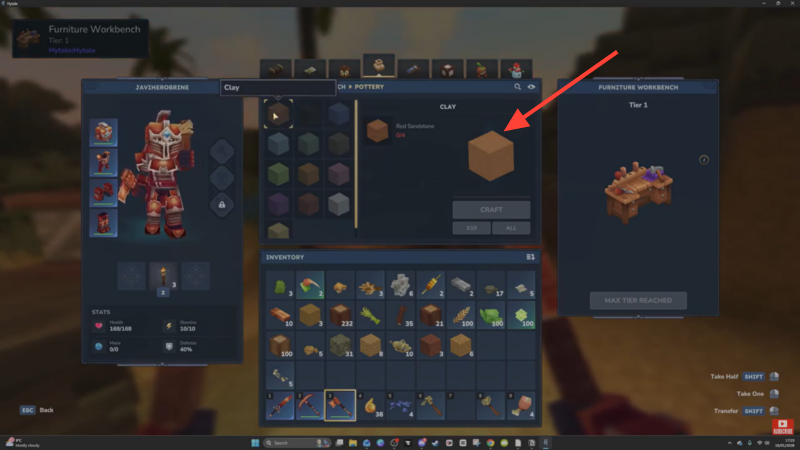
Step 3: Craft clay at a Furniture Workbench
Once you have red sandstone blocks, move to a Furniture Workbench.
The commonly used recipe is:
4 Red Sandstone → 1 clay
This ratio makes clay a mid-cost material, encouraging players to process sandstone efficiently rather than wasting blocks.
How to dye clay into different colors
Base clay is only the starting point. One of clay’s strengths is how easily it can be recolored.
At the Furniture Workbench, combine clay with:
- Flower petals for colored clay
- Charcoal for darker or muted tones
Each pigment produces a specific color, letting you match your builds to biomes, themes, or interiors. This system means you don’t need rare dyes—natural plants are usually enough.
Understanding Clay types and variants
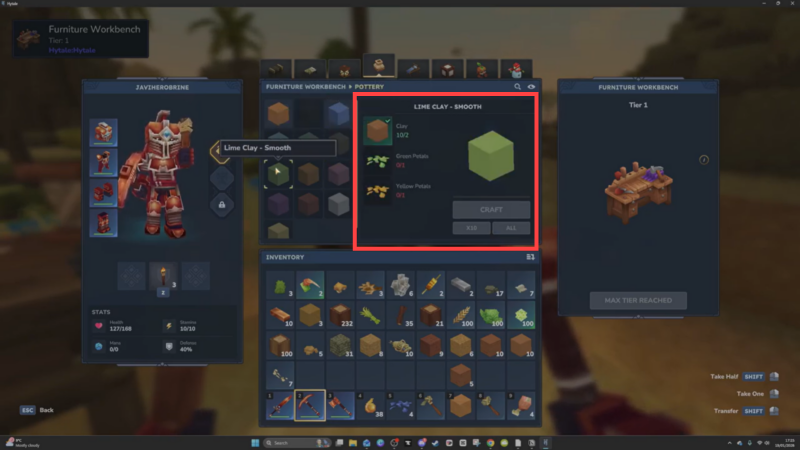
Clay isn’t a single block. It branches into several useful variants depending on how you process it. Using the Furniture Workbench, you can craft:
| Item | Ingredients |
|---|---|
| Clay | 4× Red Sandstone |
| Black Clay – Smooth | 2× Clay, 1× Charcoal |
| Pink Clay – Smooth | 2× Clay, 1× Pink Petals |
| Grey Clay – Smooth | 2× Clay, 1× Charcoal, 1× White Petals |
| Green Clay – Smooth | 2× Clay, 1× Green Petals |
| Cyan Clay – Smooth | 2× Clay, 1× Cyan Petals |
| Lime Clay – Smooth | 2× Clay, 1× Green Petals, 1× Yellow Petals |
Smooth clay variants are usually cleaner-looking and better suited for interiors, while clay bricks and roof pieces are designed for durability and structure.
Using Clay for construction
Once you move beyond decorative blocks, clay becomes a key structural resource.
Clay Uses
Clay and its variants are used for:
- Building structures and decorative blocks
- Crafting unique smooth or colored blocks
- Serving as a component in advanced crafting recipes deployed on workbenches
Because clay is counted as a rock/stone block, it can also integrate into construction recipes and aesthetic builds early in your survival progression.
Clay bricks and roof tiles are crafted at a Builder’s Workbench, not the Furniture Workbench. These recipes turn basic clay into:
This makes clay especially valuable for villages, towns, and large bases where visual consistency matters.
Locations involved in Clay production
Clay crafting doesn’t require special dungeons or rare structures. The process usually revolves around:
- Savannah or badlands biomes for red sandstone
- A furnace setup for smelting cobble
- A base area with Furniture and Builder’s Workbenches
Once these are in place, clay production becomes straightforward and scalable.
Practical tips for working with Clay
- Mine more red sandstone than you think you need; clay recipes consume blocks quickly
- Smelt sandstone in batches to save time and fuel
- Dye clay early before converting it into bricks or smooth variants
- Keep pigments and petals stored near your workbench for faster crafting
Clay rewards preparation. The better organized your crafting area is, the easier large builds become.
Why Clay matters in long-term play
Clay may start as a simple block, but it grows into a full building system once you understand red sandstone processing, coloring, and variant crafting. By mastering clay early, you give yourself more freedom in design, structure, and creativity as your world expands.
Clay sits at an important middle ground. It’s more refined than dirt or wood but easier to produce than high-tier stone or metal-based materials. This balance makes it ideal for:
- Early settlement builds
- Decorative interiors
- Large structural projects without rare resources
If you plan to build extensively, clay will quietly become one of your most-used materials.
Thanks for taking the time to go through this Clay crafting and Clay types guide for Hytale. If it helped you understand things better, do share your thoughts, impressions, or doubts in the comments section. We keep a close watch and try to respond promptly to ensure you always get the support you need.